Ready for a stress-free kitchen? These 25 organization ideas help clear the clutter and bring calm to one of the busiest rooms in your home.
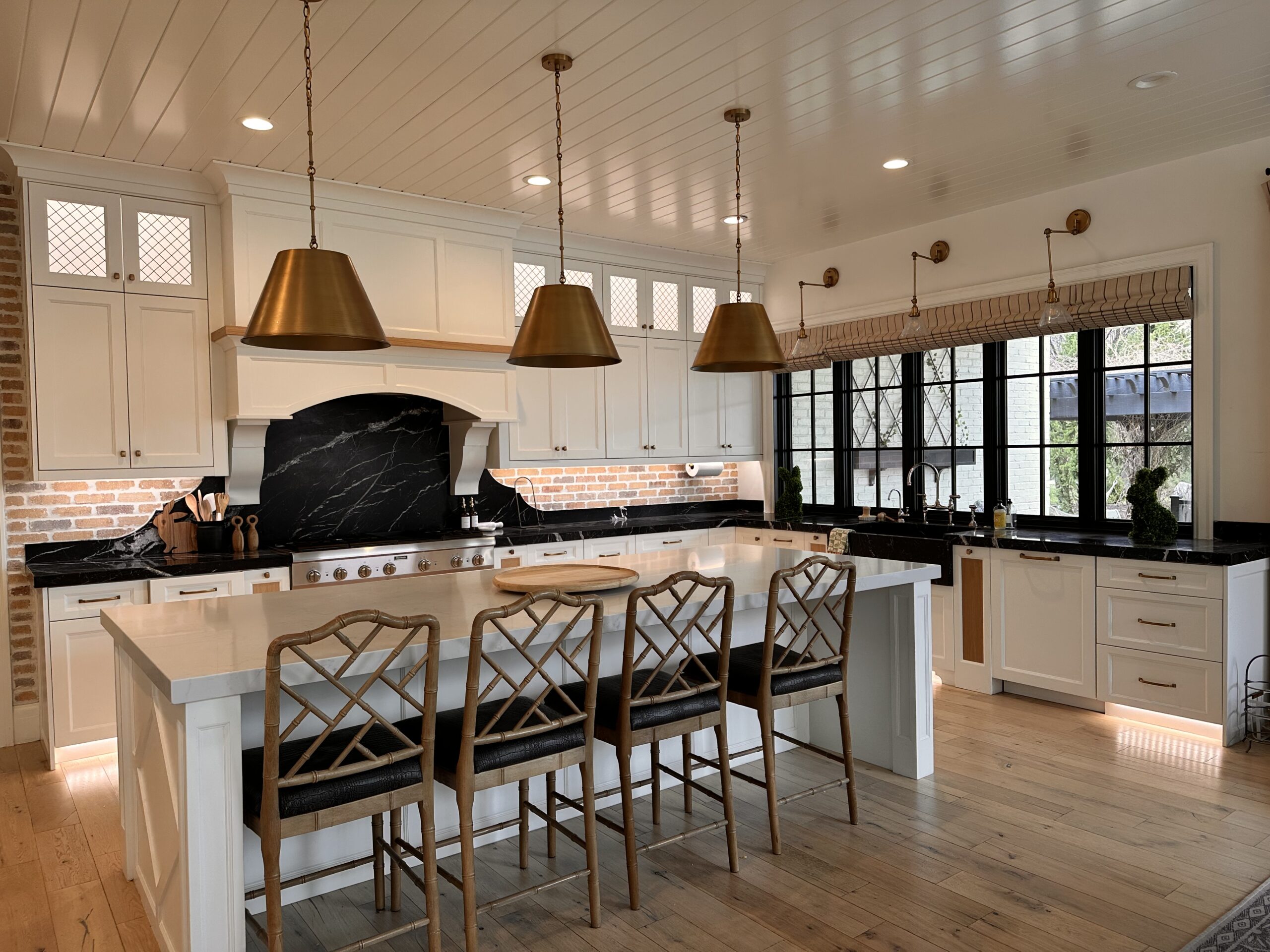
If your kitchen feels more chaotic than calm, you’re in good company! Between family meals and the endless shuffle of snacks, it’s easy for clutter to take over. But an organized kitchen doesn’t have to feel like an unattainable fantasy, especially when you can create a space that works with your routines.
I’ve gathered 25 kitchen organization ideas—from small tweaks to pro-level systems—that make a big impact. Whether you’re settling into a new home or just tired of the daily cabinet shuffle, we can help you stay organized for the long term.
Before you start reorganizing drawers or buying bins, it helps to have a plan. How do you decide where to put things in your kitchen? One of the simplest ways to map out your kitchen layout is with sticky notes—and yes, it really works.
This method helps you think through your layout before you commit to where everything goes. It’s particularly useful if you’ve just moved in or feel like your current setup isn’t working. Here’s how to try it:
Grab a stack of sticky notes and label each one with a category you’ll need to store. Think: everyday dishes, baking tools, snacks, food storage, lunch prep items, vitamins, coffee supplies, etc. This gives you a visual inventory of what your kitchen actually holds.
Place your sticky notes on the outside of drawers and cabinets where you think those items should live. Adjust as needed until it feels intuitive and natural.
This kitchen organization tip is a game-changer: keep related items in the same area. For example, group bread, spreads, and the toaster together if you make toast daily. Set up a lunch-making zone with snacks, water bottles, and lunchboxes.
Once you’ve put everything away, leave the sticky notes up for a week or two. This helps your family learn the new system and keeps things from drifting back into chaos.
Once your layout feels right, you’re ready to take it to the next level. Next are 25 kitchen organization ideas to make your setup even more functional and clutter-free.
Cabinets and drawers are prime real estate in any kitchen—but if they’re not set up thoughtfully, they can become a black hole of clutter. These tips help you make the most of the storage you already have.

Tangled tools slow you down and can easily overstimulate. Use expandable drawer organizers, clear baskets to sort cooking utensils by type, such as spatulas, tongs, and whisks in one section, and measuring tools in another. It’s a simple fix that makes grabbing what you need effortless.
If you have to bend down and dig around to find a pot, it’s time for pull-out shelves. Whether you install pull-out shelves or use 16-inch-long acrylic containers that can act as pull-out drawers, the key here is accessibility. These sliding trays bring everything into view, so you’re not constantly shifting items to reach what’s in the back.
Stacking plates, bowls, or pantry items? Use shelf risers to create a second layer without wasting vertical space. They’re perfect for cabinets that are tall but not very deep.
Don’t stack baking sheets and cutting boards flat—they’re hard to access and prone to sliding around. Use tension rods, dividers, or file organizers to store them upright in a lower cabinet.
Keep everyday items like your favorite sauté pan or the knife you use daily front and center. Stash specialty items you rarely use toward the back or up high to avoid overcrowding.
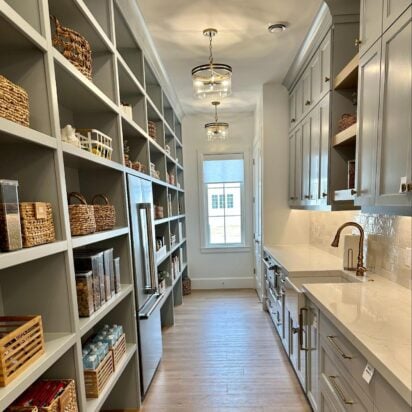
A well-organized pantry helps reduce waste and makes grocery shopping easier. When everything has its place, both an expansive walk-in pantry and a single cabinet can bring order to the chaos.
Transparent bins make it easy to see what you have and what you’re running low on. A few well-labeled baskets can add some warmth to your space, too, if clear containers feel too sterile. Group items by category (snacks, pasta, baking supplies, sauces, cans, etc.) so everything has a defined home.
Corner shelves and deep cabinets often become clutter traps. A turntable or lazy Susan lets you access spices, sauces, or oils with a quick spin and cut down on forgotten items in the back.
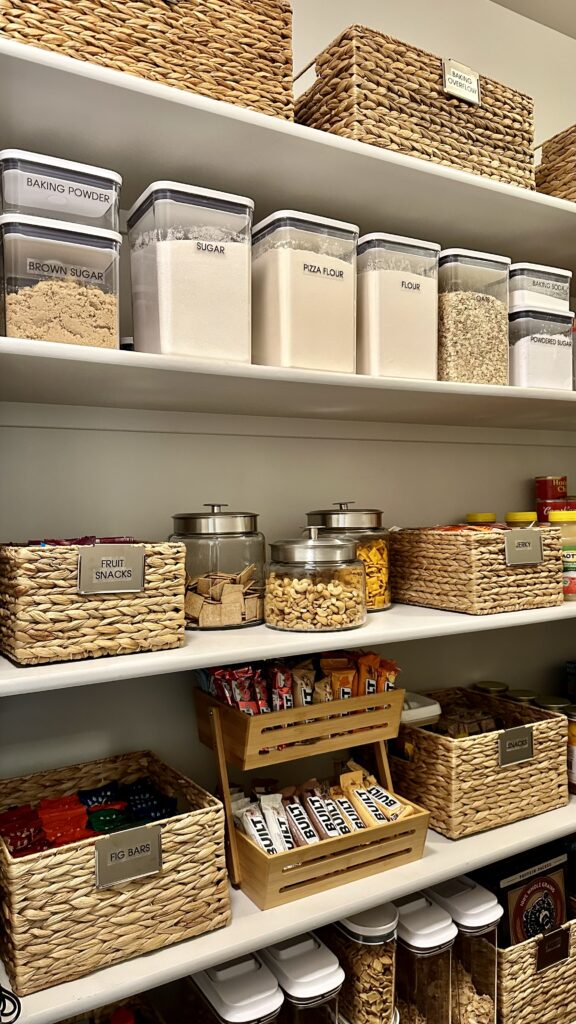
It sounds simple, but consistent labeling is key to maintaining an organized pantry. Whether you use chalkboard labels, printed tags, or dry-erase markers, clear labels help everyone know where things belong.
Set up quick-grab zones for go-to items like breakfast foods, grab-and-go snacks, or lunchbox fillers. This speeds up your routine and keeps frequently used items from getting buried.
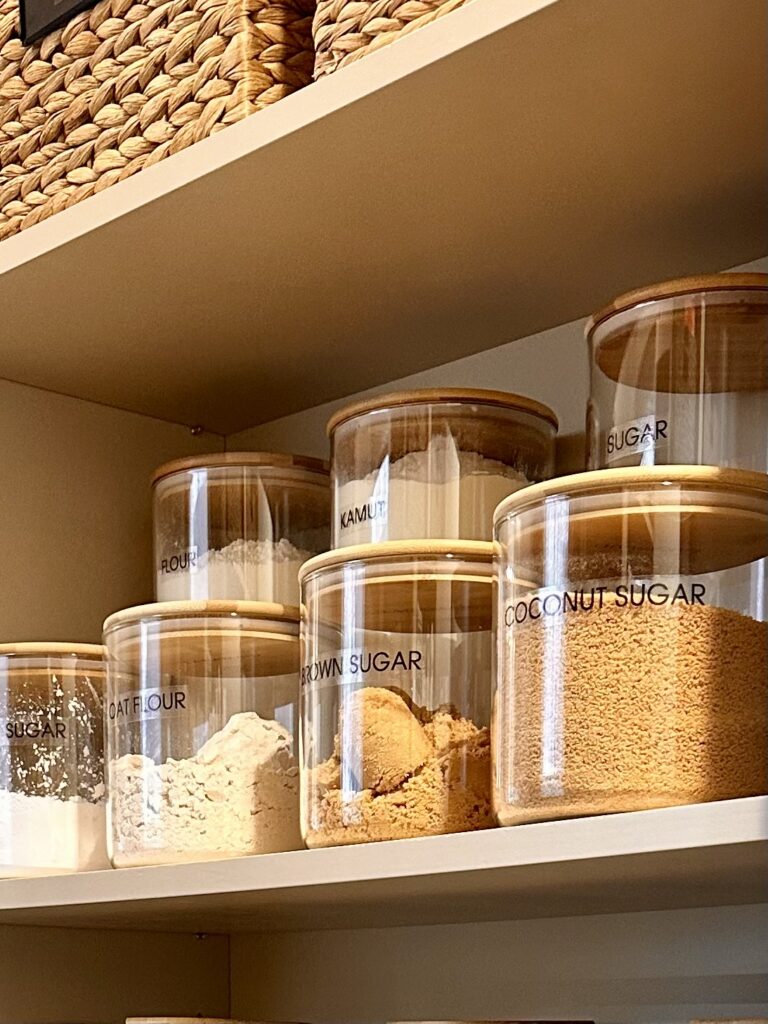
Transfer bulk items like flour, rice, sugar, oats, and cereal into clear, airtight containers. This not only keeps ingredients fresh but also cuts down on bulky packaging and creates a streamlined look.
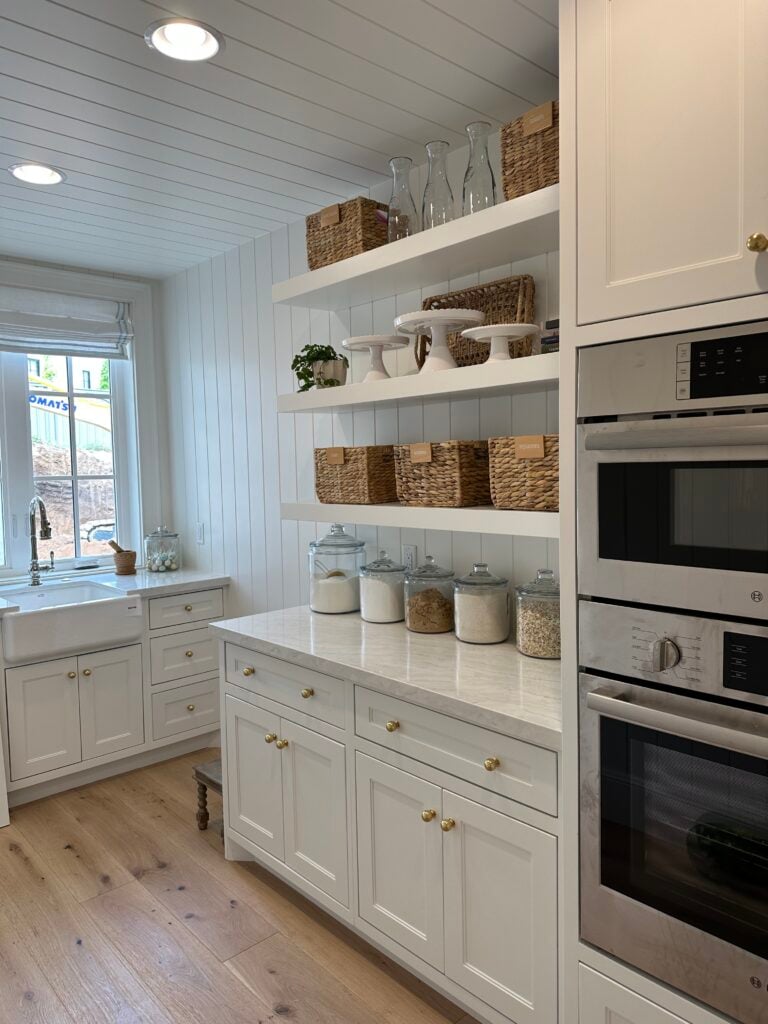
Organizing by function really is the best rule of thumb, especially in a kitchen, which has many functions. Try breaking your kitchen into zones to streamline daily tasks. Think of your kitchen like a workspace: grouping related tools and ingredients makes cooking, snacking, and cleanup faster and more intuitive.
Keep everything you need for your morning routine—coffee, filters, mugs, tea bags, sweeteners—in one dedicated spot. It keeps your counters cleaner and your mornings calmer.
If you prep lunches regularly, group lunchboxes, reusable bags, snack bins, and water bottles together. This cuts down on time and minimizes forgotten items in the rush out the door.
Designate one drawer or shelf for cereal, granola bars, oats, and bowls. Keeping breakfast essentials in one place lightens the load of busy mornings, especially for kids who like to help themselves.
Keep knives, cutting boards, mixing bowls, and peelers near your main prep space. You’ll avoid crisscrossing the kitchen and save time every time you cook.
Think through your daily habits and group tools accordingly. For example, keep your cutting boards, knives, and colanders near the sink if you often rinse and chop produce there. It’s more intuitive and easier to follow through on the kitchen tasks you set for yourself and your family.
Even the trickiest corners and gaps in your kitchen can become functional with a little creativity. These tips help you squeeze storage out of spaces that usually get overlooked.
Got a gap between your fridge and the wall? A narrow rolling cart can hold oils, spices, or canned goods—plus, it’s easy to pull out and tuck away as needed.
You can also mount magnetic shelves or spice racks to the side of your fridge for overflow items like spices, snacks, or paper towels. It’s a great way to use vertical space without adding bulk.
A tidy countertop instantly makes your kitchen feel calmer and more spacious. These kitchen organization ideas help you keep everyday items accessible without letting things pile up.
Gather oils, salt, pepper, or coffee supplies on a small tray. It creates a clean visual boundary and makes it easier to wipe down surfaces—no more moving 10 things just to clean.
Appliances that serve more than one purpose—like an air fryer that also bakes—cut down on clutter. Prioritize tools you use daily and consider donating the rest.
Prevent random mail, keys, or clutter from spreading across your counters by assigning a drawer, basket, or shelf near the entryway as a landing spot for daily items.
An organized kitchen doesn’t stay that way by accident. These tips help you maintain your system so you’re not starting from scratch every few months.
Decluttering is so freeing, but it isn’t a one-and-done process. Set a reminder every few months to reassess your kitchen. Toss expired pantry items, donate unused gadgets, and reorganize any zones that have fallen into disarray.
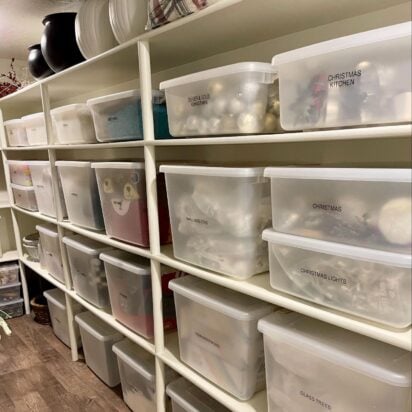
Reserve prime storage areas for the things you use daily. Holiday serveware, specialty appliances, or bulk items can go on high shelves or in less accessible cabinets.
Place a small bin or box in a nearby closet or pantry to collect kitchen items you no longer use. When it fills up, it’s time for a donation drop-off. This keeps decluttering manageable and ongoing instead of overwhelming.
How many spatulas do you really need? Multiples add clutter fast. Keep your favorites and donate the extras to free up drawer space.
Before heading to bed, spend a few minutes returning items to their zones, wiping counters, and checking tomorrow’s needs. It’s a small habit that keeps your kitchen running smoothly all week.
You don’t need a full remodel to make your kitchen more functional. With the right tools and a few clever tactics, you can turn your space into something that feels easier, cleaner, and way less stressful to use every day.
The other great news is that you don’t have to figure out kitchen organization on your own. We help clients create custom kitchen setups that work for their lifestyle, whether they’re moving into a new home or are finally ready to tackle the clutter.
Looking for expert help to get your kitchen in order? Book a free consultation or explore our organizing services to get started.