A linen closet can quickly go from tidy storage to a jumbled “everything” space, with towels stacked on sheets stacked on toiletries stacked on who-knows-what. Because we tend to shove linens in layers and add things over time, what started as a simple shelf turns into a black hole of mismatched towels, half-used toiletries, and […]
A linen closet can quickly go from tidy storage to a jumbled “everything” space, with towels stacked on sheets stacked on toiletries stacked on who-knows-what. Because we tend to shove linens in layers and add things over time, what started as a simple shelf turns into a black hole of mismatched towels, half-used toiletries, and pillowcases missing their mates.
This step-by-step guide helps you take control of your closet and create top-tier linen closet organization. No more avalanche piles when you pull down a towel, and no more buying duplicates because you can’t find what’s already there. Read on to learn our top organization tips.
Before you buy bins or start refolding towels, the most important step is hitting reset. Organizing without decluttering just rearranges the mess, and linen closets are especially prone to that kind of “shuffle organizing.” Taking the time to empty, edit, and clean your space sets the foundation for a system that actually lasts.
Start by pulling everything out (yes, everything). It’s tempting to work shelf by shelf, but completely emptying the linen closet is what allows real organization to happen. When items stay tucked away, it’s easy to underestimate how much you have or miss duplicates entirely. Once everything is out, you can clearly see your categories: towels, sheets, pillowcases, blankets, toiletries, and the random extras that tend to sneak in.
Seeing all your linens grouped together likewise makes it obvious where you’re overstocked, what you never reach for, and how much space each category actually deserves.
Proper decluttering starts with identifying fit and function. Keep only what comfortably fits on your shelves after organizing. Next, ask whether you actually use each item. If it hasn’t been reached for in the last year, it’s probably not earning its spot.
As you sort, keep an eye out for these common “toss or donate” items:
Remember: not everything that is worth keeping deserves a spot in the linen closet. If an item belongs elsewhere, relocate it. Linen closets work best when they’re reserved for towels, bedding, and closely related essentials, not as overflow storage for the entire house.
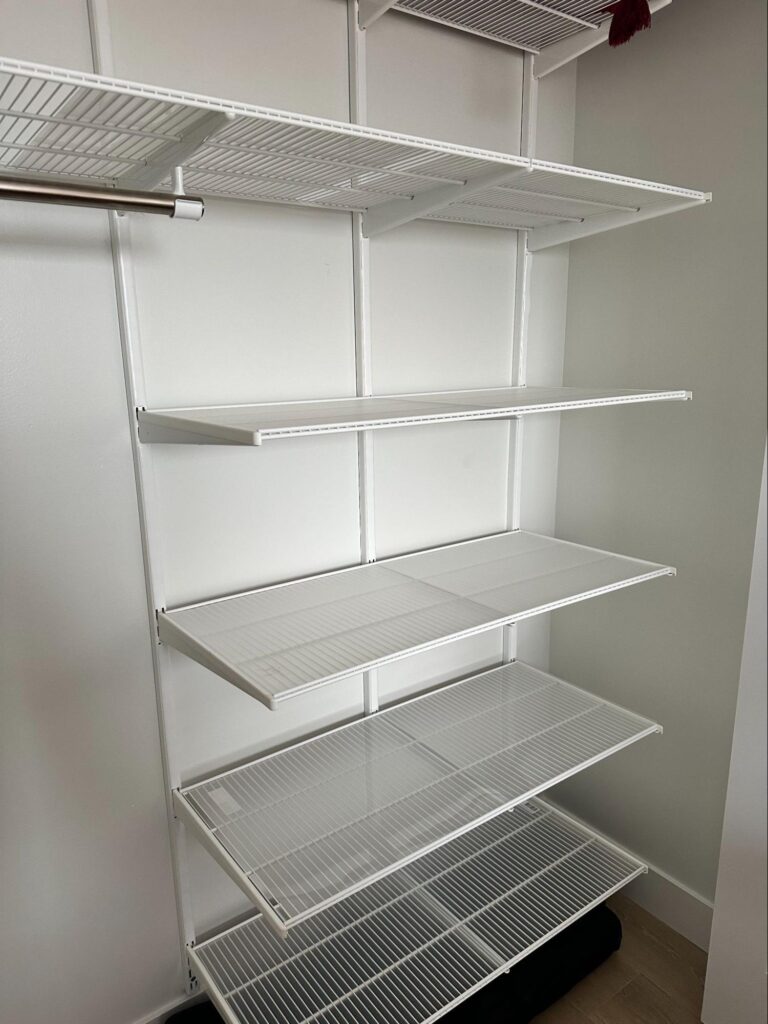
Bare shelves and an empty closet give you the perfect opportunity to give your linen closet a thorough cleaning. Vacuum the floor and all the shelves. Pay special attention to corners, as this is where dust is most likely to accumulate (and then get onto your clean towels and bedding). Finally, wipe down the entire area. This will leave you with a pristine, sanitized space that will serve as your canvas as you move onto organizing.
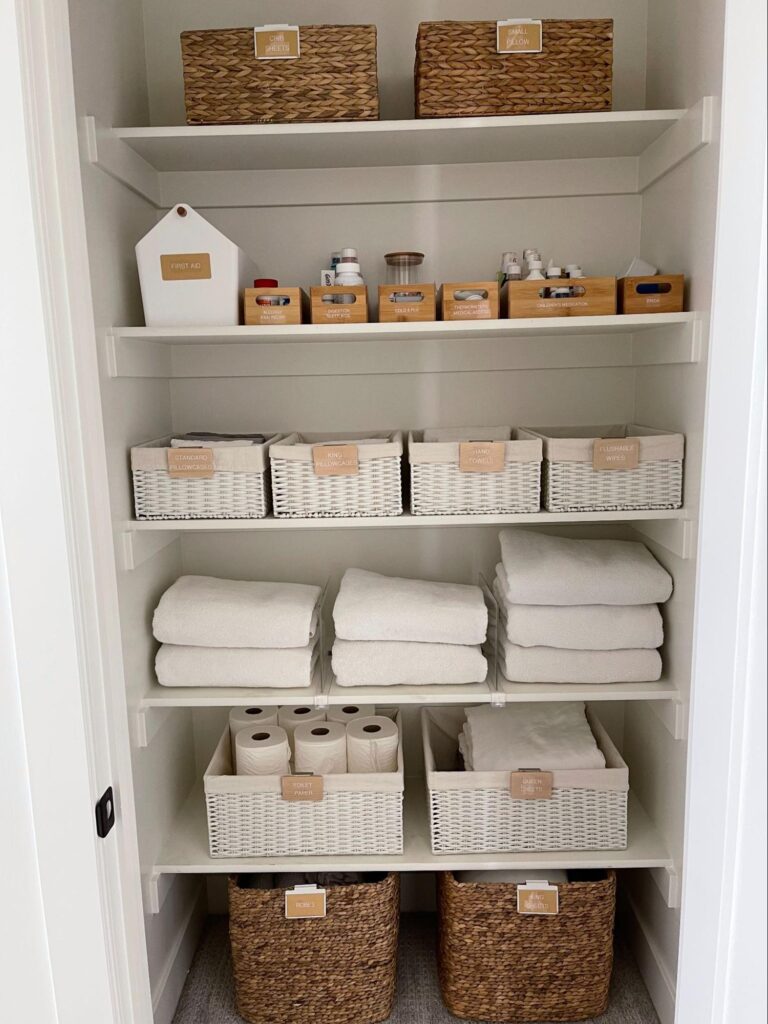
Once your linen closet is empty and you’re left only with the items you want to continue keeping in it, your next step is creating clear zones. This is what turns a “pretty for a week” closet into one that actually works long term, especially in busy households. Zones remove the guesswork by giving every category a clear home, so linens don’t slowly migrate into random, unstable piles.
Professional organizers rely on the zone method because it mirrors how people naturally use their space. Instead of organizing by appearance alone, zones assign shelves based on category and frequency of use. Items you reach for regularly should be easy to access, while less-used items can live higher up or farther back.
Think of your linen closet in vertical layers. The most frequently used items, like everyday towels, belong at eye level or just below. Medium-use items, such as extra sheets or toiletries, can live slightly higher or lower. Rarely used items, like seasonal bedding or bulk backups, are best stored on the top shelf where they won’t interfere with daily routines.
Your exact zones may vary depending on household size and storage needs, but these core categories work well in most homes:
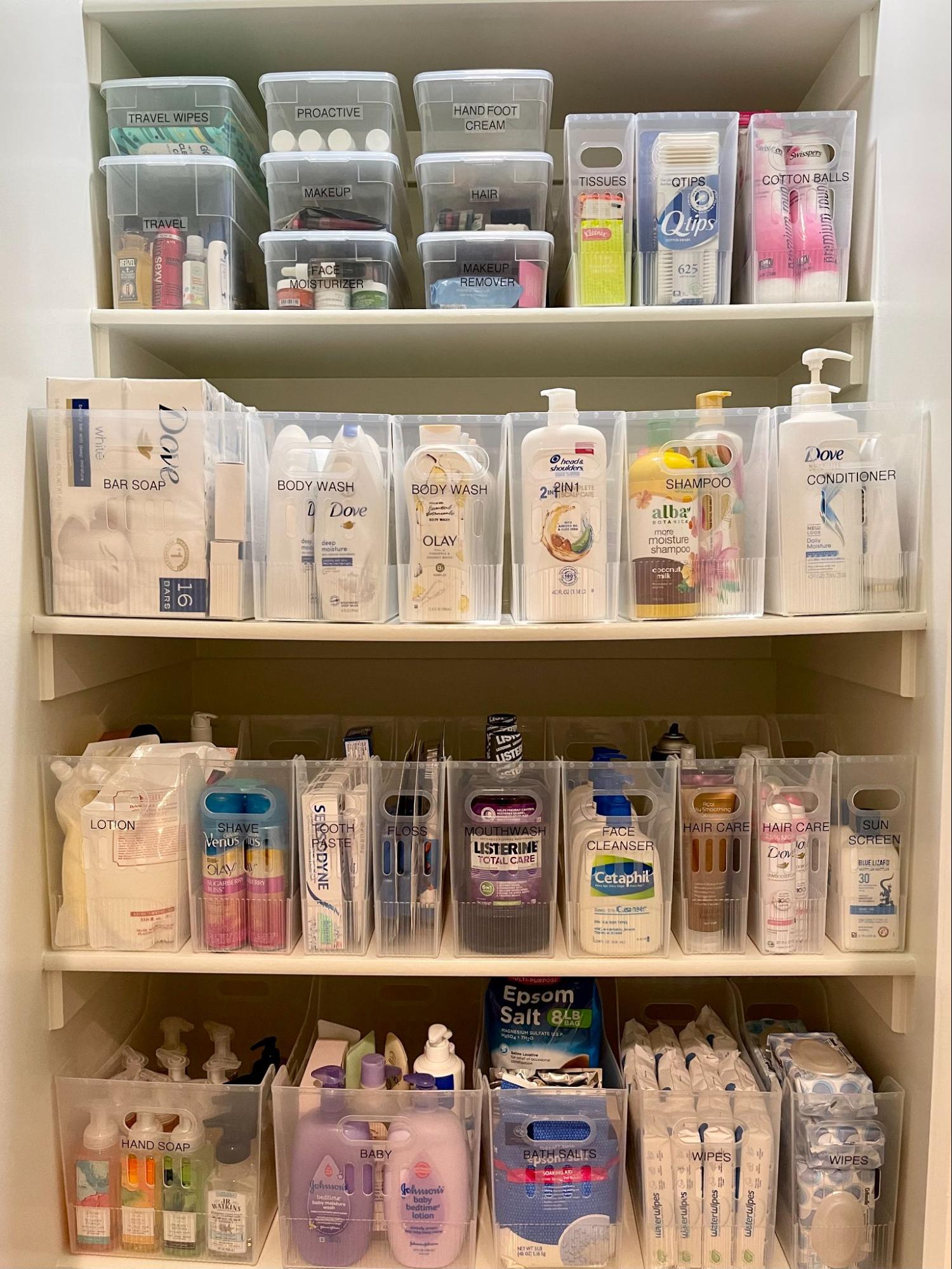
When everyone knows exactly where towels or sheets go, there’s far less chance of things being tossed onto the nearest open shelf. Labeling your zones is the easiest way to keep everything where it belongs. This approach prevents overcrowding because each category is limited to the space it’s assigned and every space is clearly identifiable.
And what happens when a zone fills up? That’s your signal to reconsider what belongs.
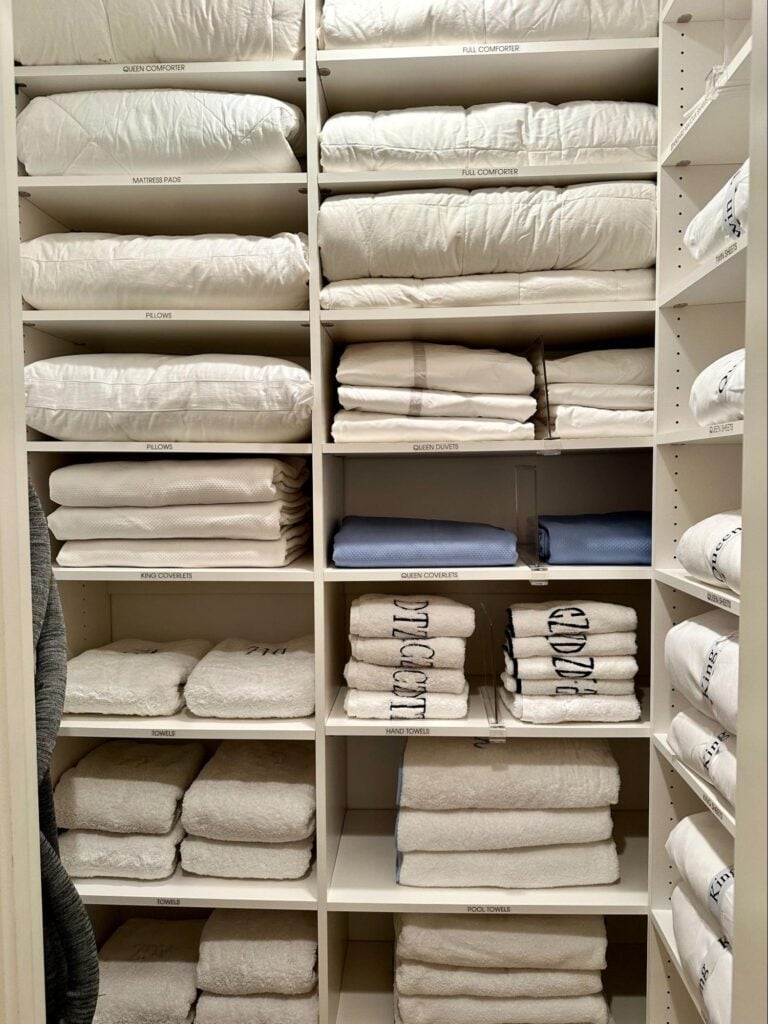
Even the best zoning system can fall apart if linens aren’t folded and stacked with intention. Uneven piles, overstuffed shelves, and mixed folding styles are usually what cause those frustrating shelf avalanches. A few simple folding and stacking strategies can make your linen closet feel instantly calmer and far easier to maintain.
Pick one folding style and commit. Mixing folding styles (some towels folded in thirds, others in quarters) creates unstable stacks that topple easily. Uniform folds allow items to stack evenly, giving shelves a cleaner and more organized appearance.
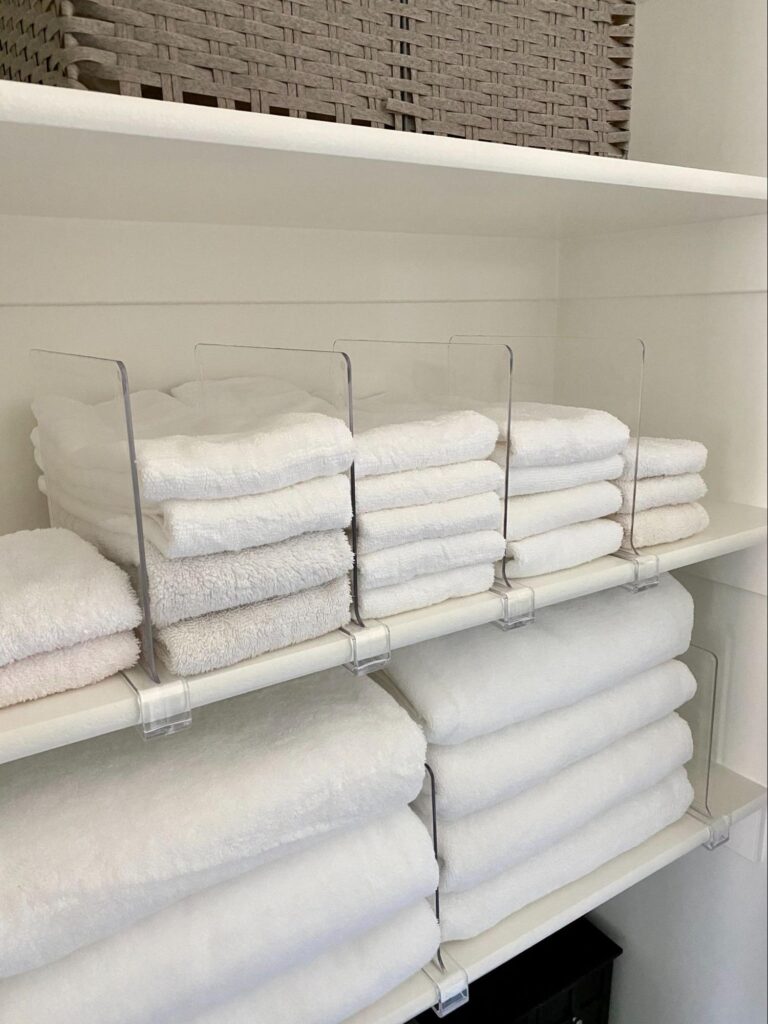
Of course, even stacks that use the same folds can end up tipping into each other. Keep these stacks upright with shelf dividers. Shelf dividers are one of the most effective tools for preventing linen closet chaos, especially if your shelves are deep. Without dividers, stacks tend to spread out or slump sideways over time, making shelves look messy even when everything is folded neatly. For sheet sets, simple sheet elastics can also help keep fitted sheets, flat sheets, and pillowcases bundled together so they’re easy to grab and identify.
Ready to get your home organized? Contact us today to learn how our professional organizers can help you create a system that actually works for your space and lifestyle.
Using dividers also allows you to assign a specific width to each stack, with bath towels in one section, hand towels in another, sheets in a third. This keeps piles upright and contained, so removing one item doesn’t destabilize everything next to it. They also make it easier to maintain your zones.
Store sheet sets together (“bed in a bag” method). Sheets are notoriously difficult to keep organized; fitted sheets slip out of stacks, pillowcases go missing, and matching sets get separated. The “bed in a bag” method solves all of that by storing each sheet set as a single bundle. And when you have complete sets that can be stored together, it makes everything easier.
To create a set, fold the fitted sheet and flat sheet together, then wrap them inside one of the pillowcases. The result is a compact, self-contained package that stays together on the shelf. Each bundle represents one bed, making it easy to grab exactly what you need without digging through multiple stacks. If you have mismatched bedding, you just as easily stack by bedding size.
When your linen closet is small, every inch counts. Limited shelving doesn’t mean you’re doomed to clutter. It just means your storage choices need to work harder.
Small linen closets may not be as wide or as deep as their bigger counterparts, but they’re usually just as tall. Vertical space is your biggest opportunity. It’s also the most-often underused. Instead of spreading items out horizontally, stack upward with intention. Folding linens into compact, uniform sizes allows you to build taller stacks without sacrificing stability. Again, consider using shelf dividers to help keep everything in line (especially given the tighter spaces you’re working with).
One of the biggest challenges in a small linen closet is overstocking. Even perfectly organized shelves can’t compensate for too much inventory. The solution is setting realistic limits on how many linens you actually need.
A helpful guideline is two sets of sheets per bed: one on the bed and one clean backup. This allows for easy laundering without storing excess sets that rarely get used. Guest beds may only need one set if space is especially tight.
The same logic applies to towels. Keep quantities based on how often you do laundry and how many people live in your home (not how many towels you could store). For most households, two to three bath towels per person is more than sufficient, along with a reasonable number of hand towels and washcloths.
If you’re dreaming of a clean and organized linen closet, our Organize Simply team can help. We specialize in transforming everyday spaces into functional and beautiful areas. We can help you if you need a brand new organization system or if you’re just looking to revamp your current setup. We love helping our customers choose pieces that are functional for organization but that also radiate luxury and look timeless.
Ready to organize your linen closet? Contact us today to schedule a consultation.
For organizing product suggestions, check out Tracy’s favorite Organizing Products on Amazon or the Organize Simply LTK shop.