If you’ve ever watched your child tear through a pile of toys, declare they’re “bored,” and wander off to watch YouTube (all within 15 minutes), you’re not alone. It’s one of the great parenting paradoxes: the more toys kids have, the less they seem to actually play with them. Enter toy rotation. It’s one of […]
If you’ve ever watched your child tear through a pile of toys, declare they’re “bored,” and wander off to watch YouTube (all within 15 minutes), you’re not alone. It’s one of the great parenting paradoxes: the more toys kids have, the less they seem to actually play with them.
Enter toy rotation. It’s one of those ideas that sounds almost too simple to work, and yet it genuinely changes things. More focus, more creative play, less clutter, fewer meltdowns. Here’s everything you need to know, including the best toy rotation ideas to get you started.
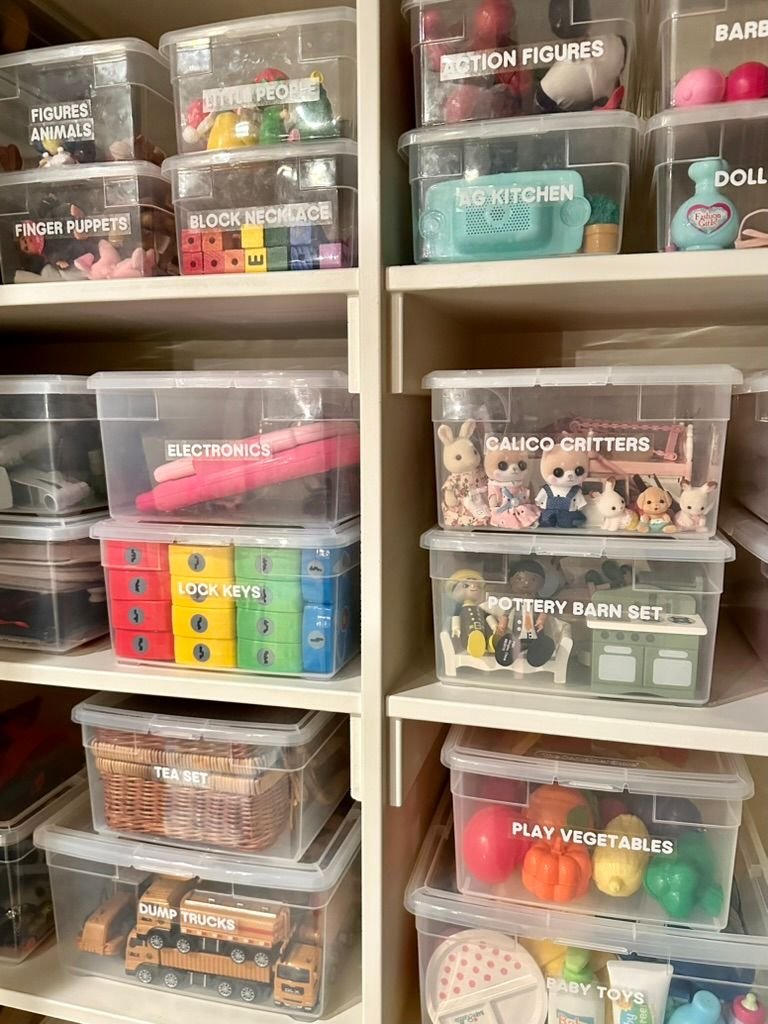
Toy rotation is the practice of keeping only a limited selection of toys available to your child at any given time, while storing the rest out of sight. After a set period (a week, two weeks, whenever the moment feels right) you swap some toys out and bring others back in. The “new” toys feel exciting and fresh, even if your child has played with them dozens of times before.
Think of it like rotating a capsule wardrobe, but for the playroom. You’re not buying more stuff: you’re just managing what’s visible and accessible at once.
This isn’t a new concept, either. It’s been a cornerstone of the Montessori approach for decades, rooted in the idea that a thoughtfully curated environment helps children focus, explore, and develop more deeply than one overflowing with options.
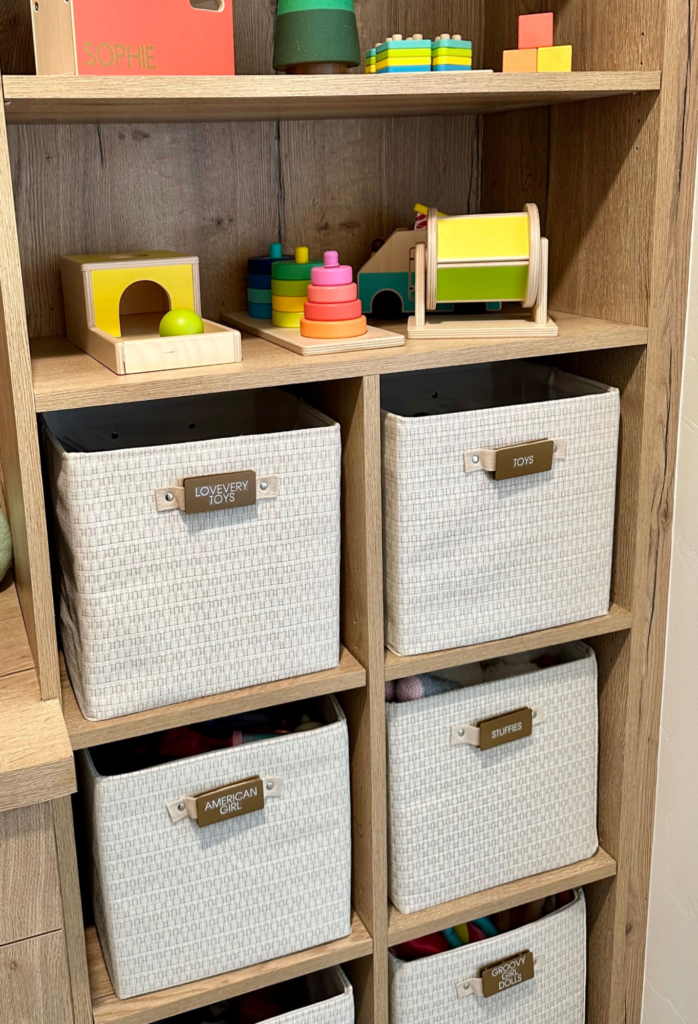
Before we get into the practical how-to, it’s worth talking about why so many families swear by this approach. Because the benefits go beyond just a tidier floor. Here are some of the top perks:
Ready to get started? Here’s a simple, low-stress approach to setting up your own toy rotation system from scratch.
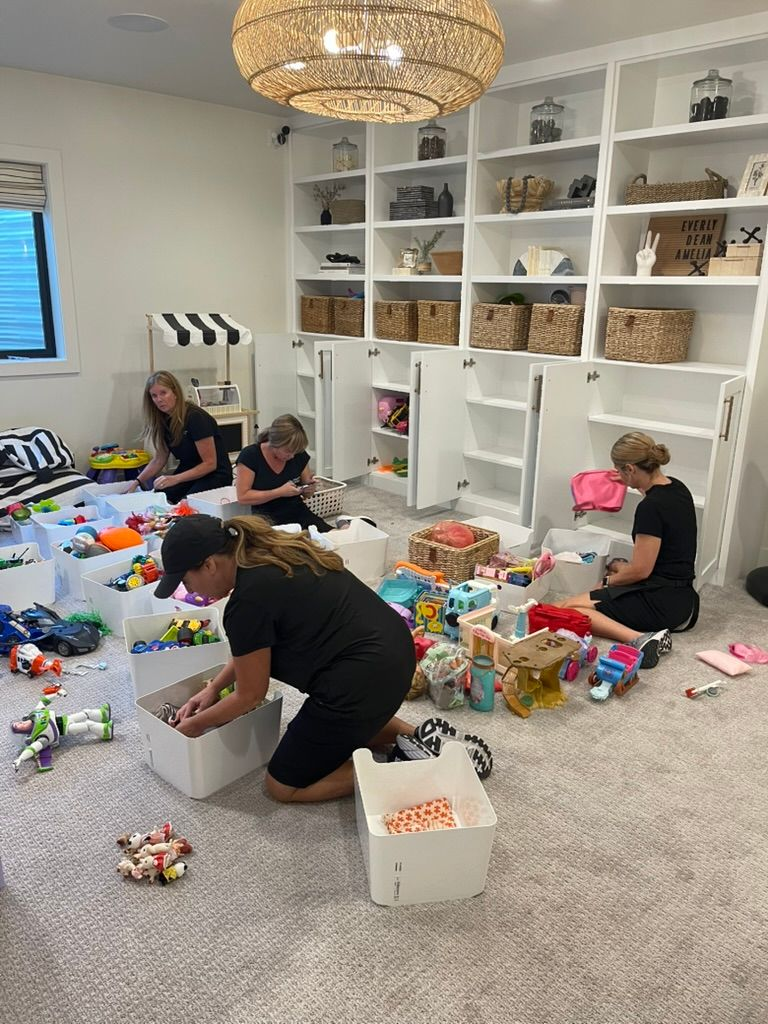
Gather every toy in the house (yes, all of them) into one space. This is your audit moment. Sort into three piles:
Don’t skip the donate/trash step. Rotation works best when you’re not trying to manage an enormous backlog of stuff. Pare it down first, then rotate what’s left.
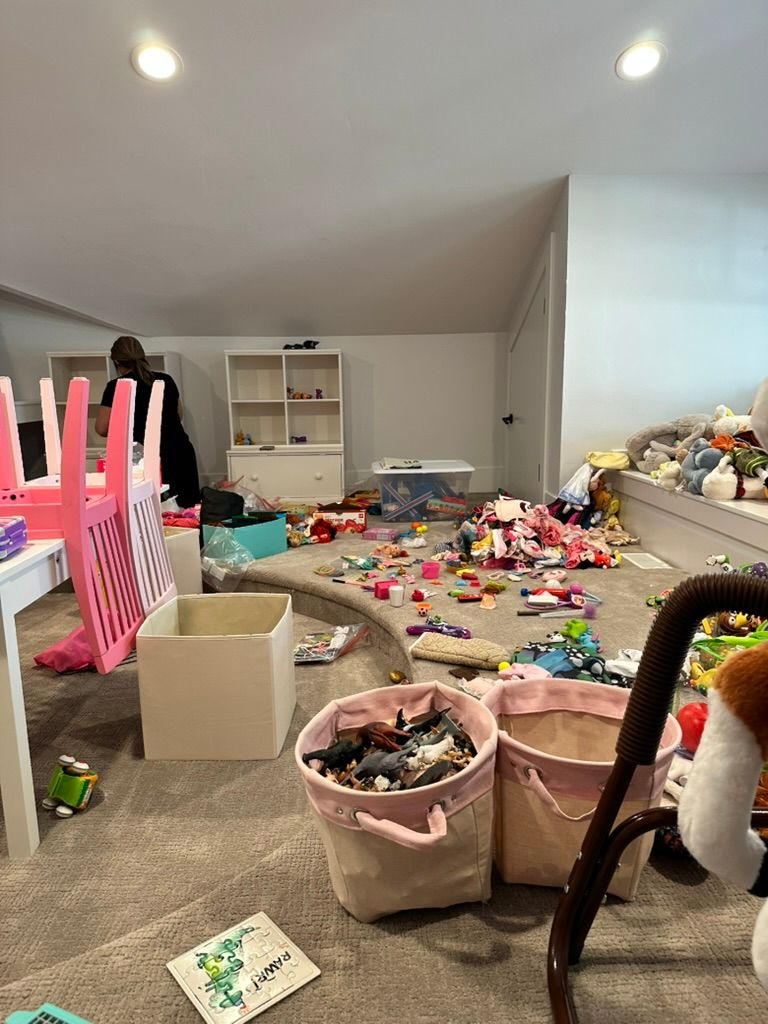
Once you know what you’re working with, group toys by type. A well-balanced rotation includes a mix of play styles so kids get variety. Some useful categories:
The goal is to have each rotation include a little something from multiple categories, so playtime stays varied and developmentally well-rounded.
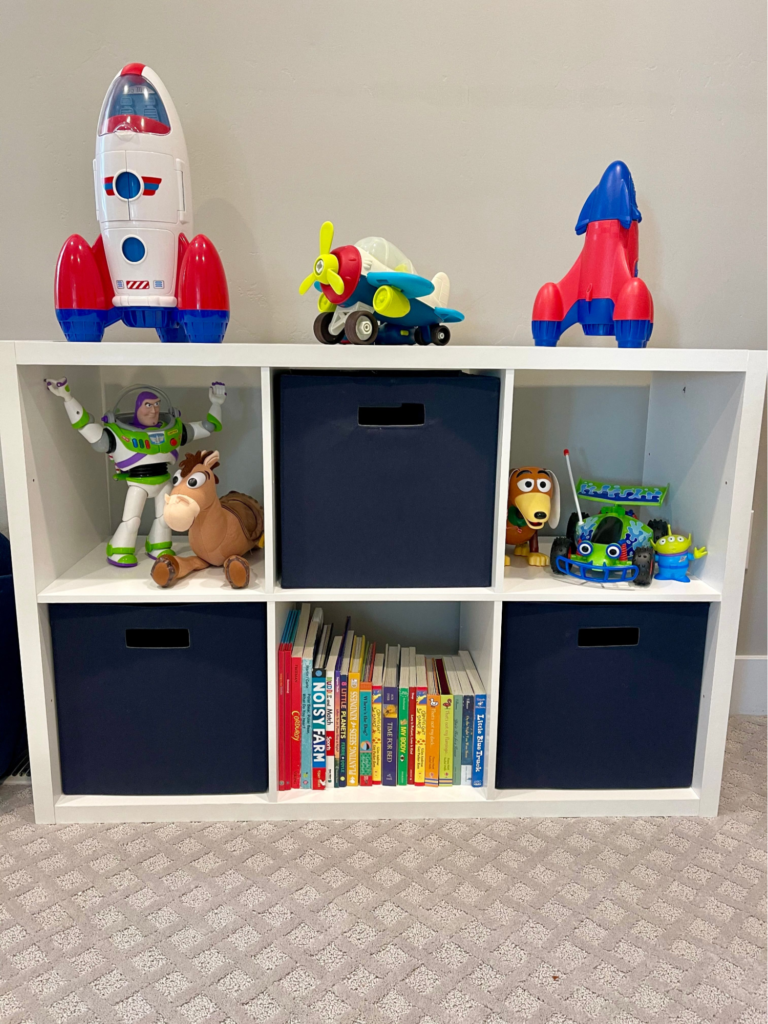
Most experts and parents land somewhere between 8 and 12 toys or activities in the play area at a time. That’s enough variety to keep things interesting, but not so much that it tips into chaos. A good gut-check: if your child can mostly tidy their play space on their own, the number is about right. If cleanup consistently overwhelms them, pull a few things back into storage.
Keeping a few simple toys in easy-access bins can also encourage more independent play and cleanup routines, especially for younger children. Toys without lots of tiny pieces are often easier for kids to grab, use, and put away on their own.
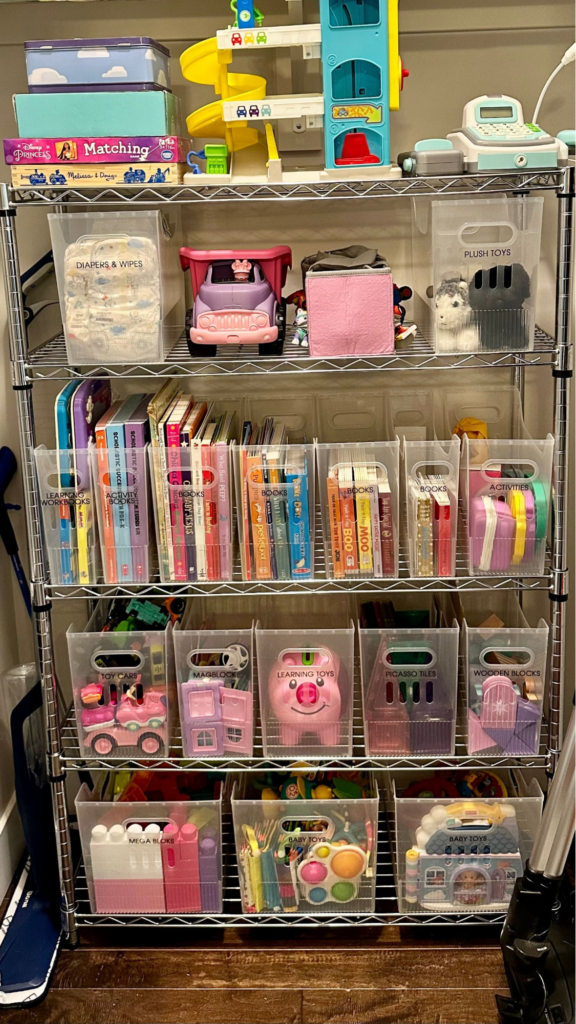
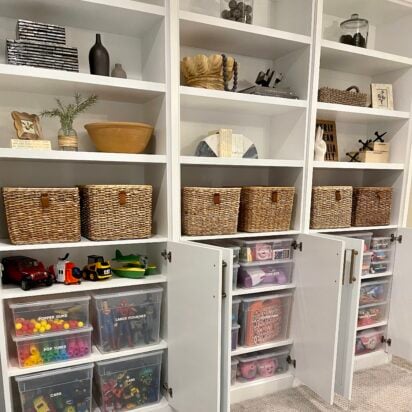
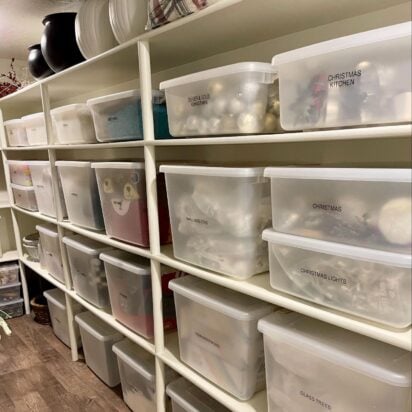
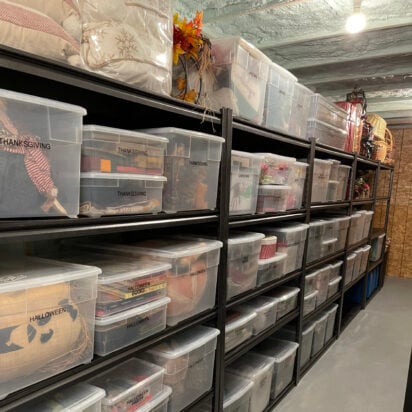
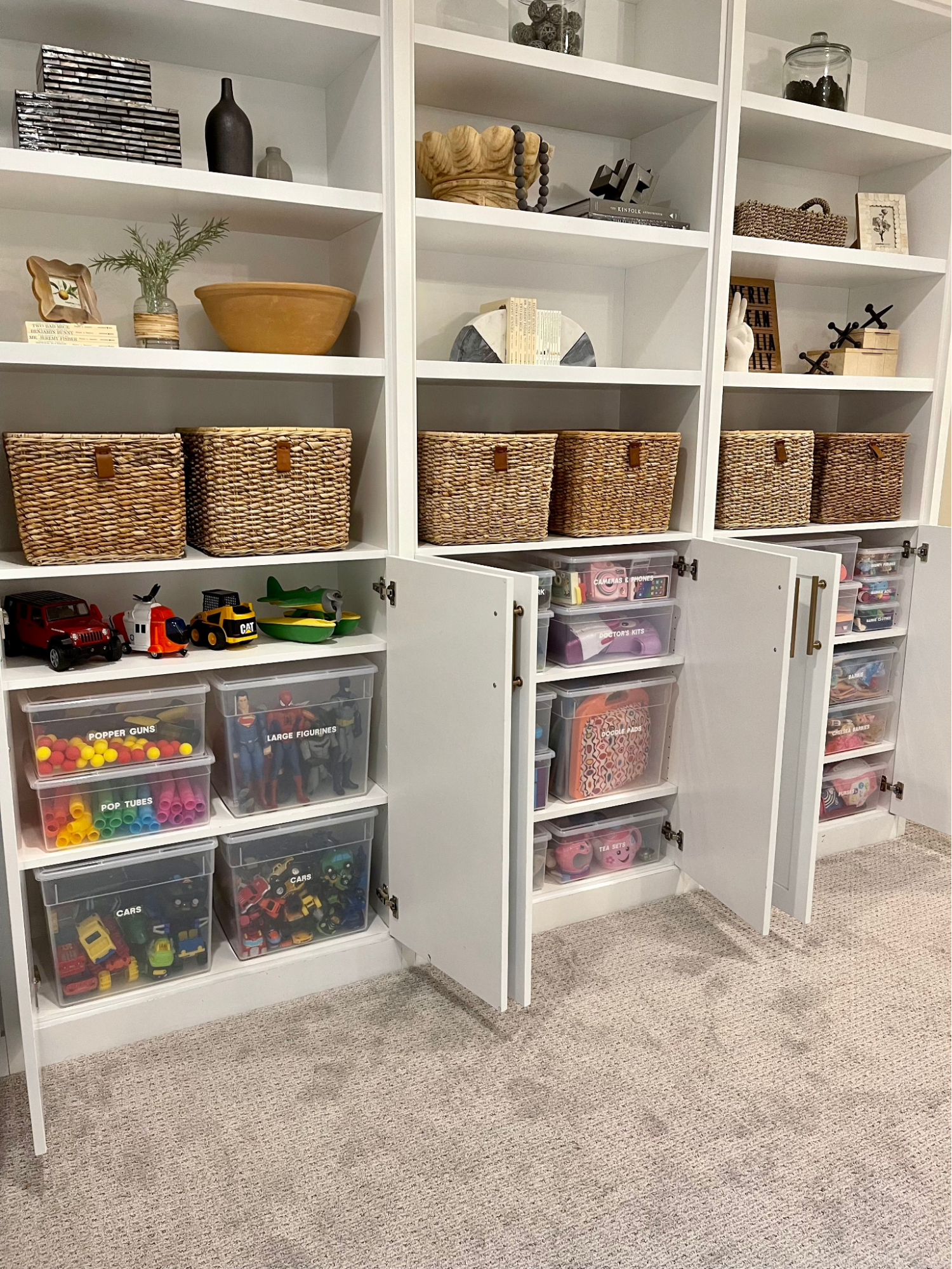
This is where toy rotation storage ideas come in handy. The key is keeping stored toys truly out of sight, because “out of sight, out of mind” is the whole point.
Some practical storage options:
Whatever you use, keep containers manageable in size and weight. You’ll be moving them periodically, so make sure you can actually carry them.
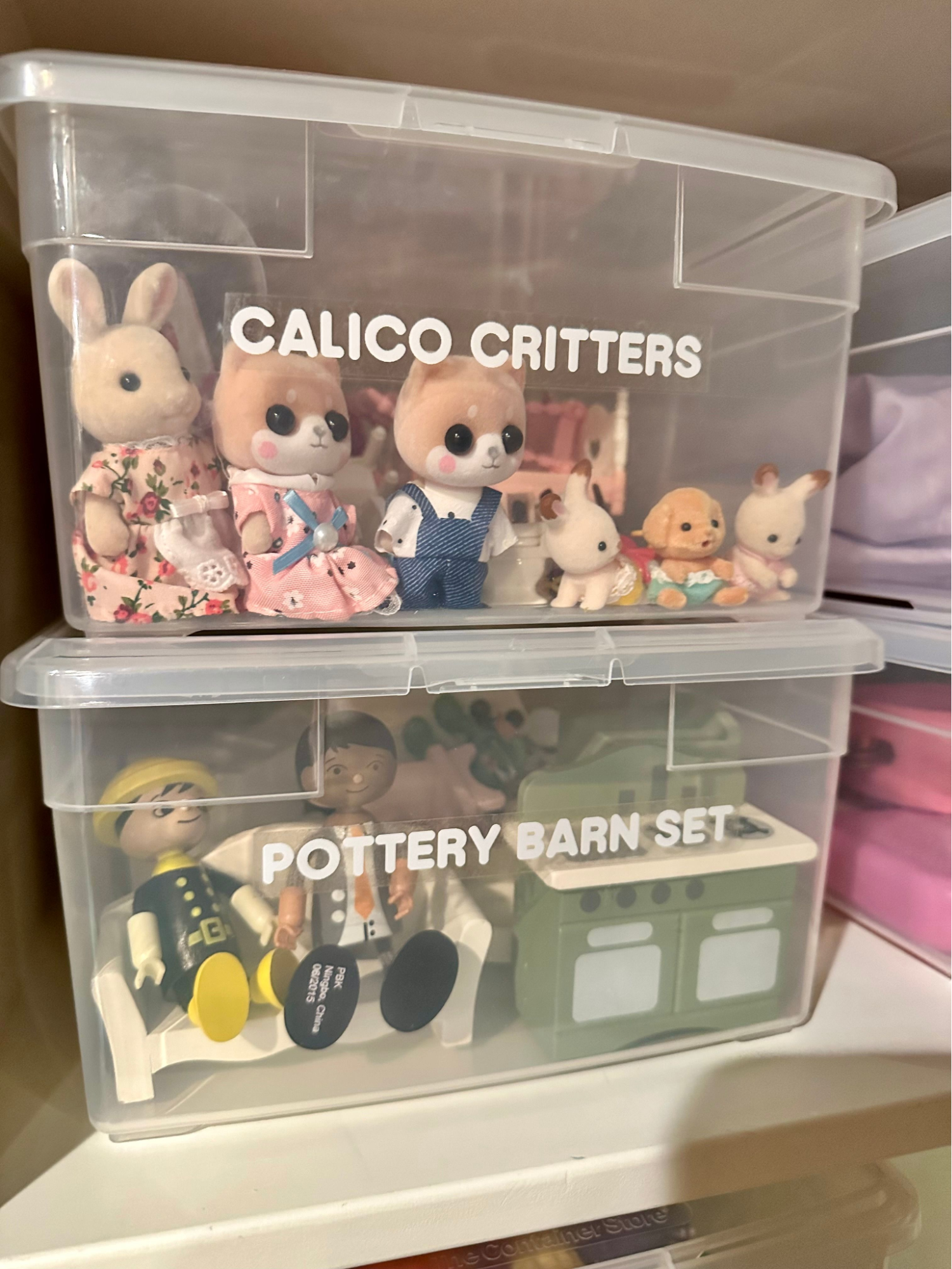
Once you have the basics down, you can get creative with how you build each rotation. Themed rotations are especially engaging because they give kids a cohesive little world to explore.
Pull out animal figures, a toy barn, some play food, maybe a tractor. Add a picture book about farms. Simple, imaginative, and great for language development.
Blocks, LEGO or Duplo, magnetic tiles, cardboard tubes, tape. Let them construct to their heart’s content with no other distractions competing for attention.
Watercolors, crayons, stickers, stamp sets, playdough. Set up a little creative station and watch them go.
Align toys with the time of year. Summer might bring out sand toys, water play accessories, and safari animals. A winter rotation could include cozy pretend play sets, building toys, and themed books.
This one is wonderfully open-ended: a basket of pom-poms, wooden rings, river stones, fabric scraps, and small containers. Kids use them however they like, whether that’s sorting, building, or role-playing. Great for toddlers especially, as it encourages problem-solving and creativity.
Sometimes simpler is better. Pull out the tried-and-true favorites that have been in storage for a few weeks (a beloved puzzle, a set of blocks, a favorite doll) and watch your child greet them like old friends.
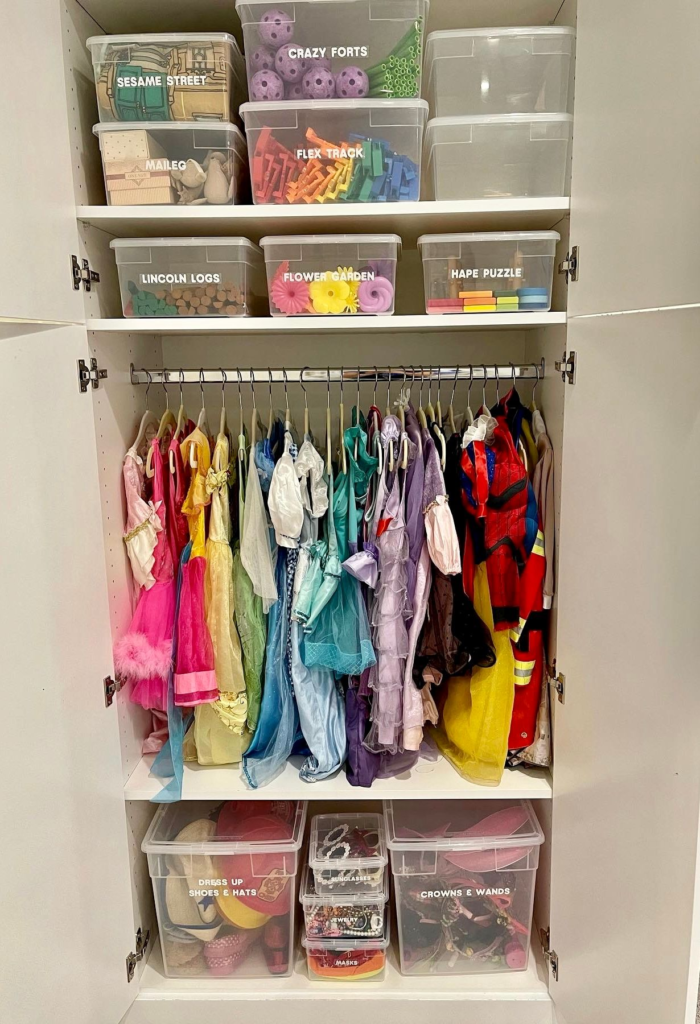
Toy rotation works at any age, but it’s especially transformative for the toddler years (roughly 1–3). Here’s what to keep in mind for the little ones:
There’s no single right answer, but a common sweet spot is every one to two weeks. Weekly works well for younger toddlers. Two to four weeks suits preschoolers and older kids who tend to engage more deeply with each set of toys before losing interest.
Watch your child for cues. If you notice toys sitting untouched for several days in a row, that’s a good signal it’s time to rotate. If they’re still playing happily with what’s out, leave it be. The schedule serves you, not the other way around.
Starting a toy rotation system doesn’t have to be a big project. You can begin with just one bin of stored toys and see how it goes. Most parents are surprised by how quickly their kids adapt, and how much calmer the whole household feels when the playroom isn’t perpetually overflowing.
The best toy rotation ideas are the ones that work for your family, your space, and your child. Start simple, stay flexible, and trust the process. You might just find that your kids have never played better, with the exact same toys they already had.
If you’re looking for support with designing your toy rotation organization system, look no further than Organize Simply. We specialize in transforming everyday spaces into calm, beautiful, and functional places you actually enjoy using, even your kids’ rooms.
We can help you if you need a brand new organization system or if you’re just looking to revamp your current setup. We love helping our customers choose pieces that are functional for organization but that also look timeless. If you’re interested in Tracy’s favorite organization products, you can shop them through her Amazon storefront or the Organize Simply LTK shop.
Ready to create your dream space? Contact us today to schedule a consultation.