Discover 10 practical refrigerator organization tips for a fresher, more functional fridge. Learn how to zone food, use clear bins, and build better habits after your next grocery haul.
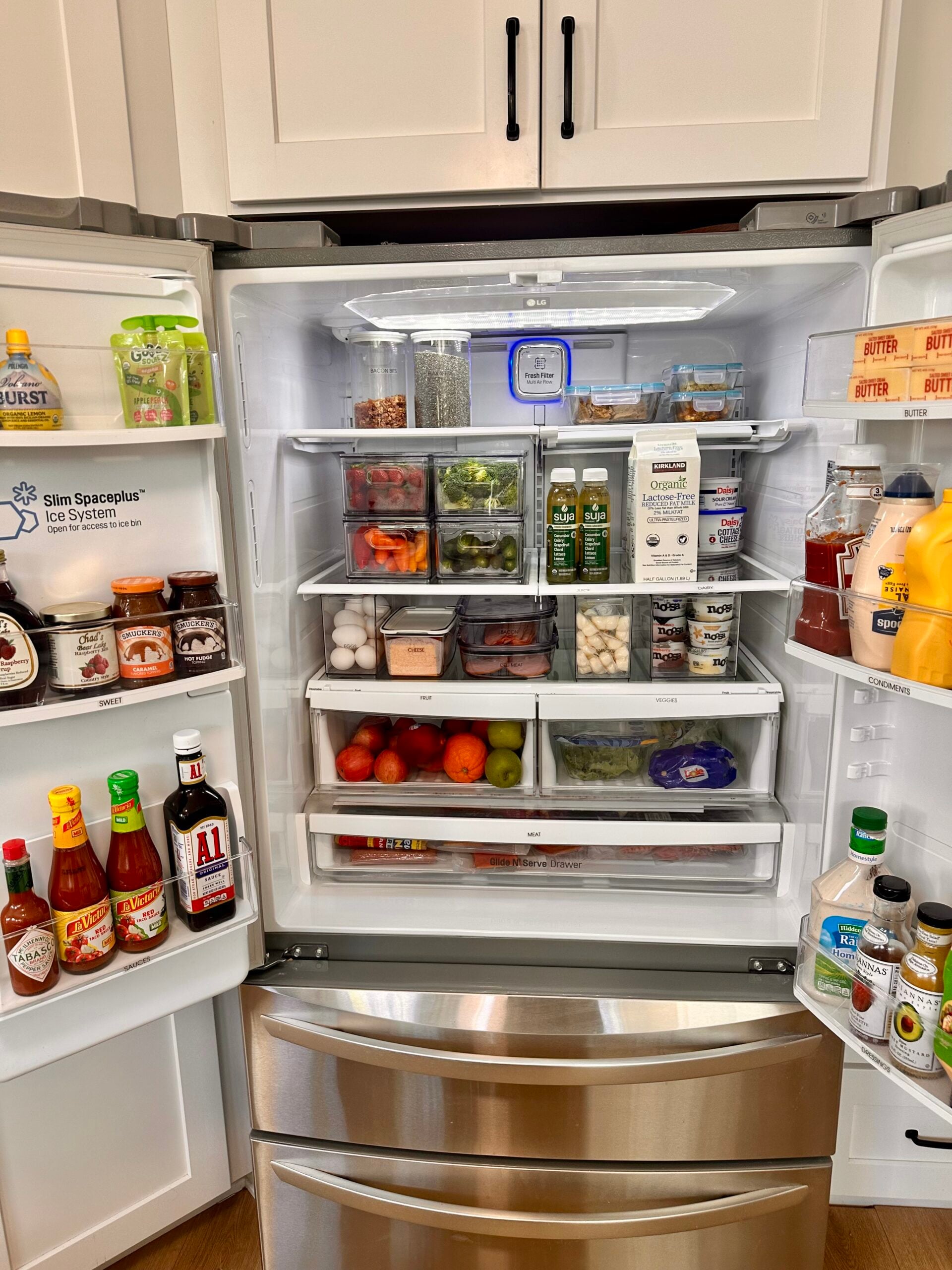
You know that moment when you open the fridge and get hit with the mystery smell of what used to be dinner? Or when you discover three open jars of pickles, none of which you remember buying? If this sounds familiar, your fridge might be due for a little organizing.
A messy refrigerator can lead to wasted food, last-minute grocery runs, and more stress when you’re already hangry. But the good news? Getting your fridge in order is way easier than you think—and totally worth it.
At Organize Simply, we help people create functional spaces that support their real lives. If your fridge is stuffed to the brim or just needs a tune-up, this guide breaks down the best layout and 10 smart tips to make fridge organization simple and sustainable (and maybe even fun!).
Fridge chaos often starts with poor placement. If you’re tossing groceries in wherever there’s room, you’re not alone. But you might be working against your fridge’s natural design.
Believe it or not, different areas of your refrigerator are built to store specific types of food. Organizing by zone helps preserve freshness and cut back on waste. Here’s a quick breakdown of the best fridge layout.
Think of your fridge like a zone map. Grouping similar items and storing them in their ideal spots keeps things fresher and makes it way easier to find what you need.
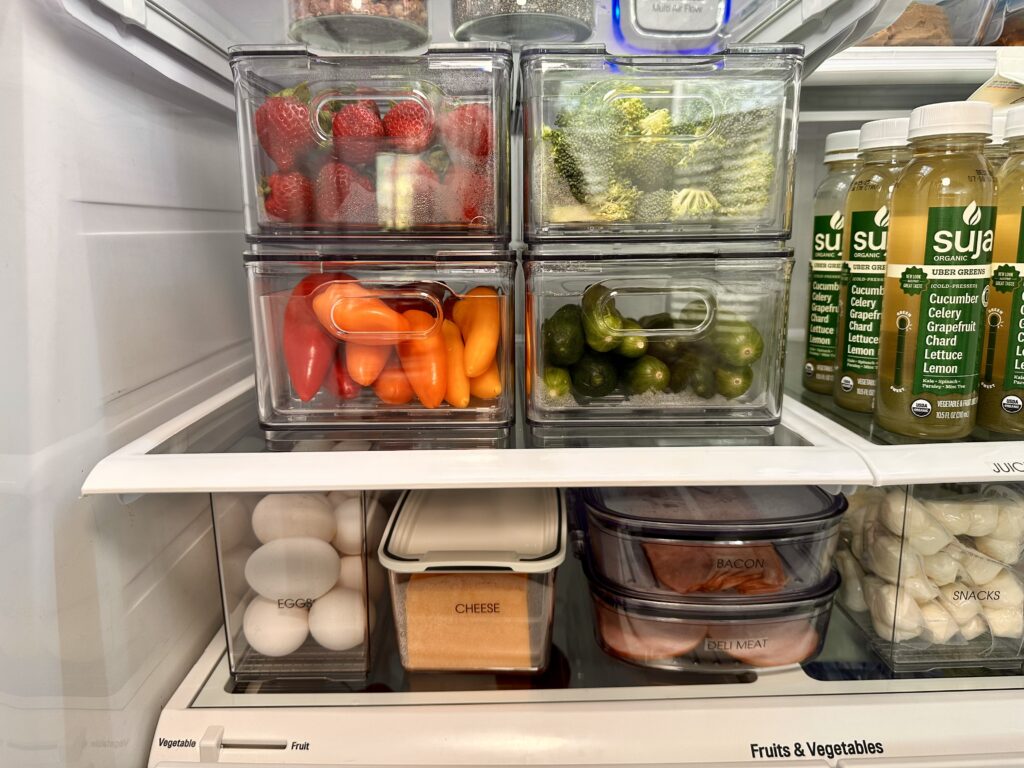
If you’ve ever found a stray string cheese behind the salsa jar and thought, there’s got to be a better way, you’re absolutely right. Fridge organizers may be trendy, but they actually make a big difference in how your fridge functions day to day.
Clear bins, stackable drawers, and lazy Susans help group similar items and make everything easier to see and reach. No more forgetting about that hummus tucked in the back or knocking over three bottles just to grab the pickles.
And whenever possible, ditch bulky packaging. It takes up unnecessary space and makes the fridge look messy and chaotic. Transferring items to bins or clear containers gives you a cleaner look and more room to work with.
Here’s why fridge organizers are worth the hype:
Some must-haves to consider include clear storage bins for grouping snacks, sauces, or produce and egg containers with lids for stackability. Stackable drawers or shelf risers are a great way to make the most of vertical space.
You can find the exact fridge organizers from the photos right here, if you’d like to check them out.
Before you buy, measure your fridge shelves so you can choose bins that truly fit the space. The right-sized bins make the most of each shelf—and help avoid clutter from oddly shaped or oversized containers.
Bonus: organizers make your fridge look calm and clean—even when life isn’t.
An organized fridge might seem like a small win, but it makes a big difference. It helps prevent spoilage and cross-contamination by keeping foods in the right zones. You’ll waste less, spend less, and cut down on last-minute grocery runs because you can actually see what you have.
Mealtime becomes faster and easier, whether you’re packing a lunch or reaching for a snack. And let’s be honest—there’s something deeply satisfying about opening the fridge and finding everything in its place. It’s one of those simple upgrades that brings a little more order to everyday life.
The short answer: more often than most of us do. But don’t worry, it doesn’t have to be a full scrub-down every time. Just a few consistent habits can keep your fridge in shape and your food fresher.
This simple cleaning and organizing rhythm can help you maintain a clean fridge.
Even the best fridge layout needs the right habits and tools to stay organized. These 10 tips make it easier to keep things tidy and reduce waste.
Create zones that match how your household actually eats. This means snacks in one bin, condiments in another, and produce in its drawer. Keeping similar items together makes restocking easier and cuts down on forgotten food.
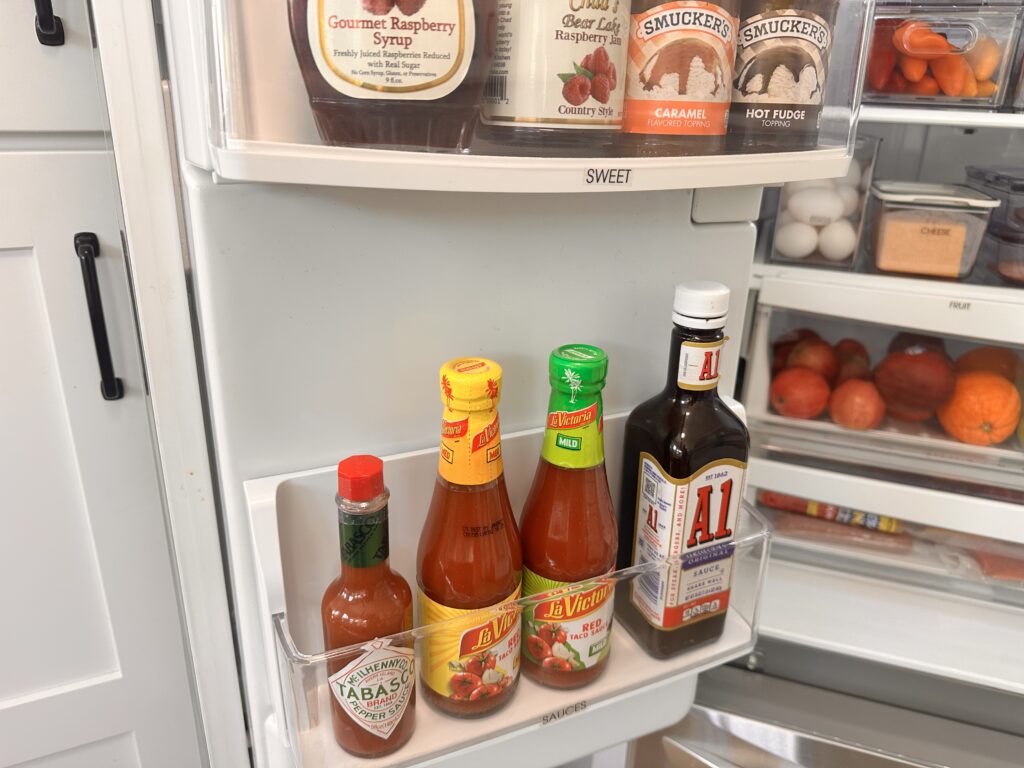
Clear bins help you see what you have at a glance. But visibility only goes so far if no one knows where things go. Add simple labels like Snacks, Dairy, or Lunch Prep so everyone in the house can stick to the system. Use a label maker with white or black text on clear label tape—it’s clean, legible, and blends seamlessly with any container or fridge style.
A quick way to simplify cleanup is to use paper towels or washable liners in drawers and bins. They catch spills and help prevent cross-contamination—especially in produce drawers.
First In, First Out isn’t just for grocery stores. Rotate older items to the front when you add new ones, especially with leftovers or opened containers. It’s a simple system that prevents waste and surprise science experiments.
Stuffing every shelf makes it harder for cold air to circulate and increases the chance something gets forgotten (or spoiled). Leave space between items and around vents so your fridge can work efficiently.
A lazy susan can be the perfect solution for jars, dips, sauces, and yogurts that tend to get lost in the shuffle. A quick spin brings everything into view and makes it easier to grab what you need without knocking over everything else.
If your fridge has tall shelves, use that height! Add stackable bins, shelf risers, or even pull-out drawers to take advantage of vertical space. This is especially helpful in small or crowded refrigerators. Just be careful not to overdo it—always leave an open area for leftovers so you’re not scrambling for space when storing extra portions or meal-prepped dishes.
Designate a bin or section of a shelf for items that are close to expiring or leftovers that need to be eaten soon. It’s an easy way to reduce waste and help others know what should be prioritized.
Want kids to grab healthy snacks? Or hoping to make meal prep smoother? Keep frequently used snacks, lunchbox items, and prepped veggies front and center. The easier they are to see, the more likely they’ll get eaten.
It sounds simple, but this one’s easy to skip. Wiping spills as they happen keeps gunk from spreading and saves you from a dreaded sticky shelf cleanout later.
Despite the best intentions, a few missteps can sabotage your fridge organization efforts. These are some of the most common mistakes and how to avoid them.
A little attention to these details can make a big difference in how well your organization system actually works and how long your food stays fresh.
A well-organized fridge may be nice to look at, but it also makes life easier. From storing food safely to simplifying your daily routine, a clear system helps your kitchen run more smoothly. And the best part is that it doesn’t take a full weekend overhaul to get there.
Start with the basics: group similar items, use a few clear bins, and stick to smart fridge zones. Then build habits that support the system, including weekly resets and regular check-ins. Before you know it, fridge chaos will be a thing of the past.
Need a little extra help getting started or want a custom solution that fits your home and habits? Organize Simply offers one-on-one sessions to help you create fridge systems that work in real life—not just on Pinterest.
Ready to get your fridge in order for good? Book a session with an expert today.