A walk-in closet can be a dream, or it can quickly become a place where clothes, shoes, and bags get crammed wherever they fit. Having extra square footage doesn’t automatically mean you have enough storage, and it certainly doesn’t mean the space will stay tidy on its own. Good walk in closet organization isn’t just […]
A walk-in closet can be a dream, or it can quickly become a place where clothes, shoes, and bags get crammed wherever they fit. Having extra square footage doesn’t automatically mean you have enough storage, and it certainly doesn’t mean the space will stay tidy on its own.
Good walk in closet organization isn’t just about making the space look pretty. A well-organized closet should make getting dressed easier, help you see what you own, and be simple enough to maintain. At Organize Simply, we believe every item should have a home. Whether you’re planning master closet organization or looking for small walk in closet organization tips, these closet organization ideas will show you how to organize a walk in closet so it is beautiful, functional, and maintainable.
Before you buy baskets, hangers, or organizers, start with your clothes. Work through your closet one category at a time. Pull out your T-shirts and go through those first, then move on to jeans, sweaters, dresses, shoes, and so on. Tackling one category at a time keeps the process from becoming overwhelming.
Try things on if you aren’t sure about them. Let go of anything you don’t wear, don’t like, or that no longer fits.
Here is where we take decluttering one step further: don’t just keep everything you love. Keep what fits comfortably in the space you’ve designated for that category. Say you’ve decided where your dresses will hang, and that space comfortably holds 10 dresses. If you have 15 that you love, you still have some decisions to make. Choose your favorites until the dresses fit comfortably, then donate the rest.
We like to say, “Let the space establish the limit.” The same principle works for jeans, sweaters, shoes, purses, and almost every other category in your closet. It also helps to remember that someone will be thrilled to find one of those dresses at a donation center, maybe a piece they love but could never have afforded new. Instead of focusing on what you’re giving up, think about how happy someone else will be.
When clothing is packed tightly together, it’s harder to see what you have and harder to put things away. A little breathing room makes your closet much easier to use.
Once you’ve edited your wardrobe, start grouping like items. Keep T-shirts with T-shirts, blouses with blouses, dresses with dresses, pants with pants, and jackets with jackets.
Don’t overcomplicate your categories, though. If you only have a few items in a category, you don’t necessarily need to divide it further. If you own a lot of tops, it might make sense to separate them into tanks, T-shirts, everyday tops, blouses, and dressier tops.
There isn’t one perfect way to categorize a closet. The system should make sense for what you own, how you get dressed, and the space you have available.
Now decide where each category belongs. Put the clothing you wear most often where it’s easiest to reach. Items you use less frequently can go higher or farther back in the closet. Seasonal and special-occasion pieces are ideal for those higher spots since you don’t need them every day.
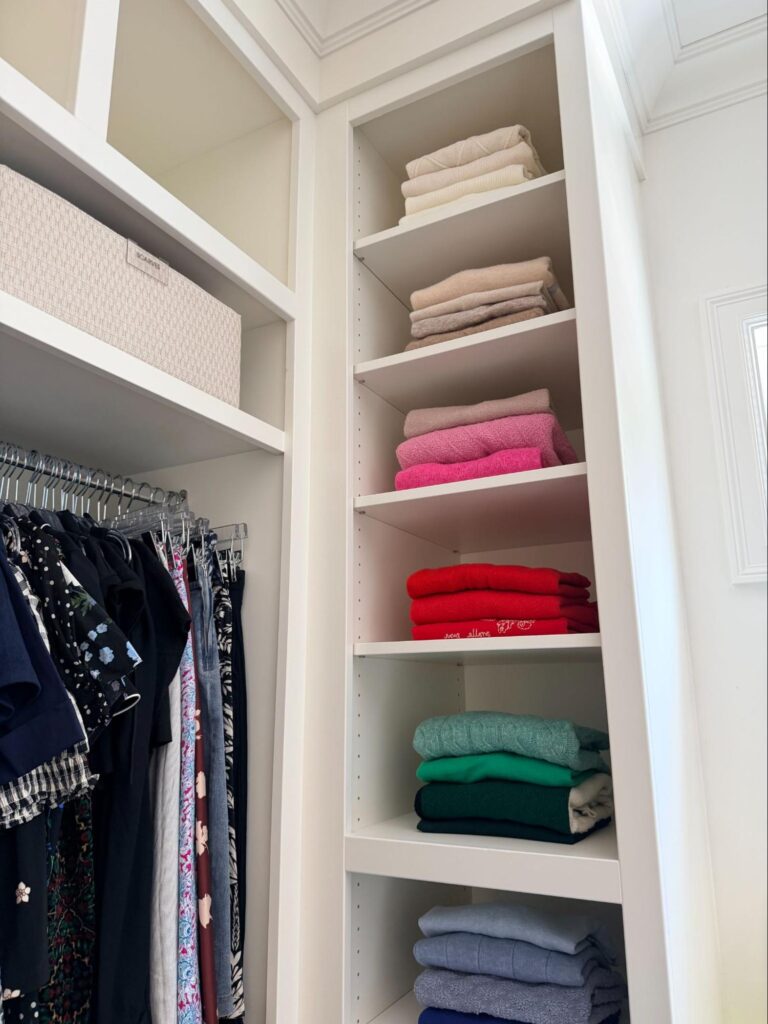
Sweaters and jeans are often easier to keep neat when folded on shelves, while other clothing may work better hanging. The important thing is that every category has a designated home. Once you’ve established that space, use it as your limit for how much you keep.
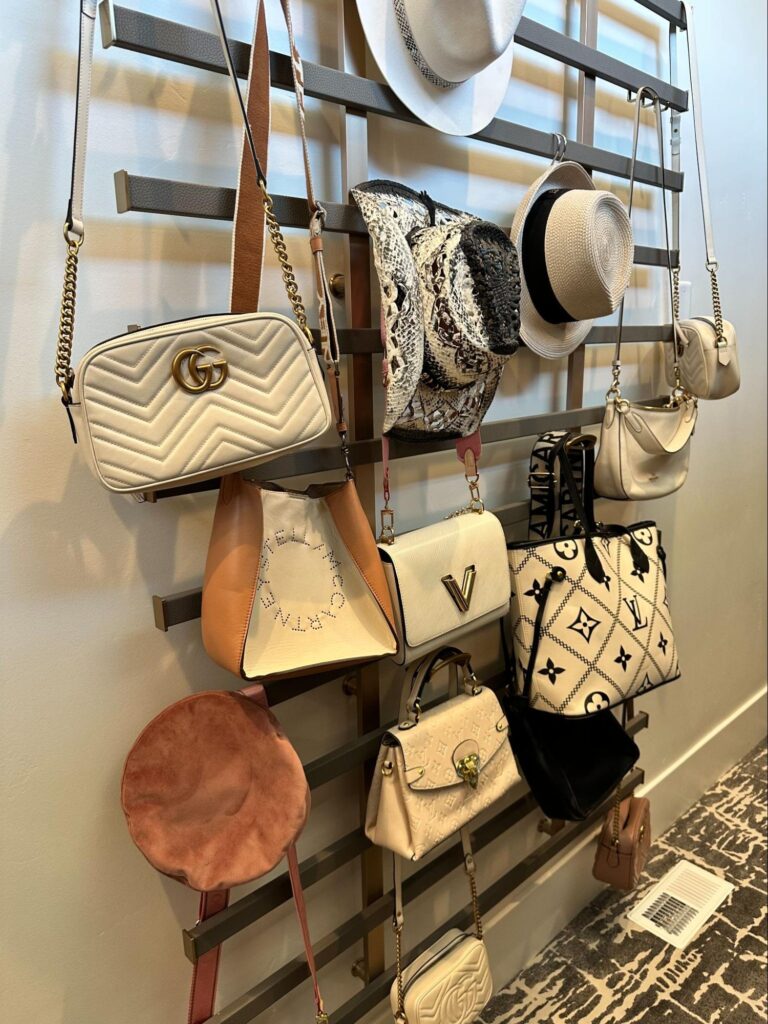
When you’re finished, you should know exactly where something belongs, and putting it away shouldn’t require much thought. That is the real secret behind any lasting walk in closet organization system.
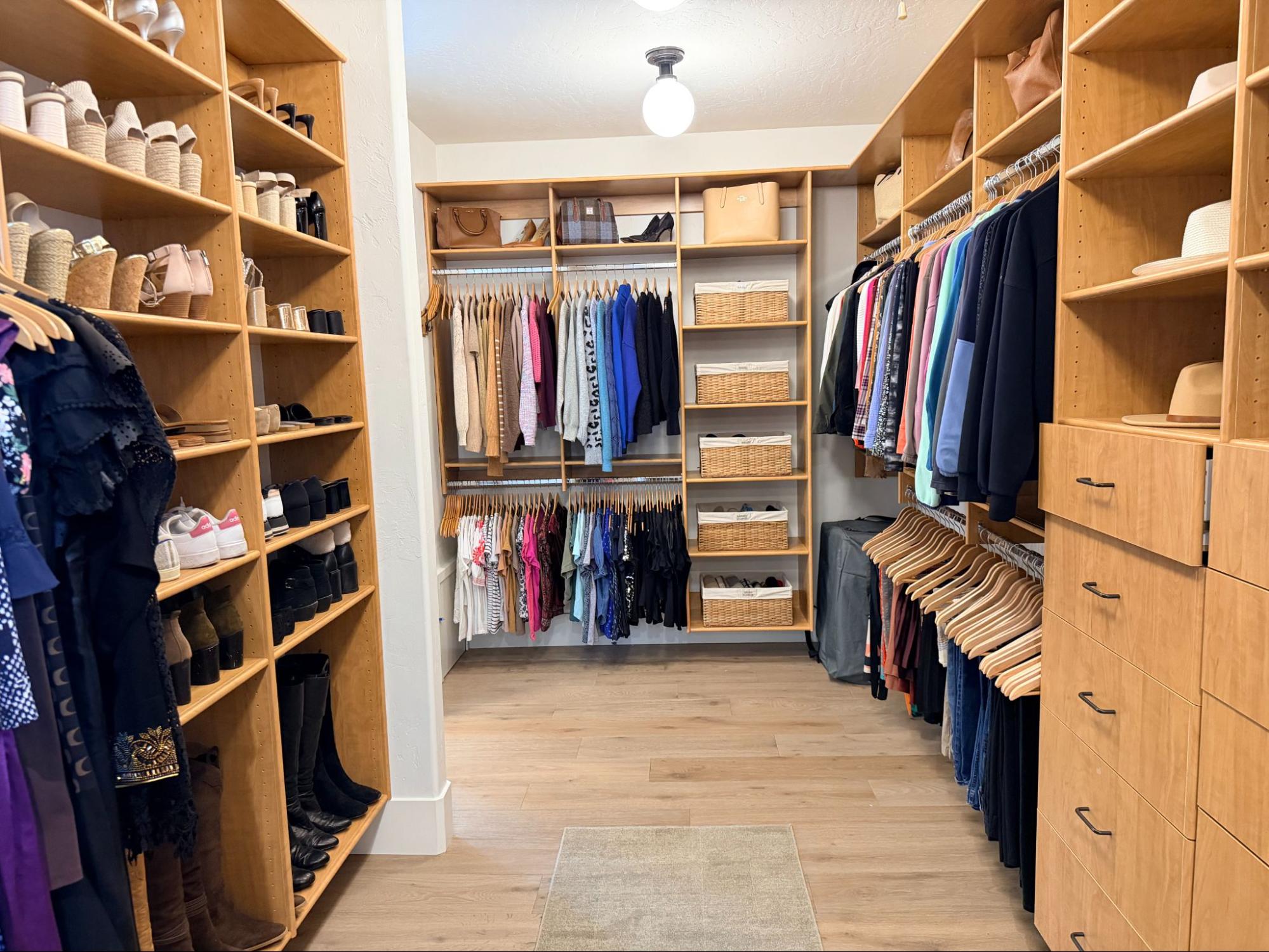
We almost always color-code closets. Once your clothing is separated into categories, arrange each category by color. You can use a traditional rainbow order or simply group similar tones together from light to dark.
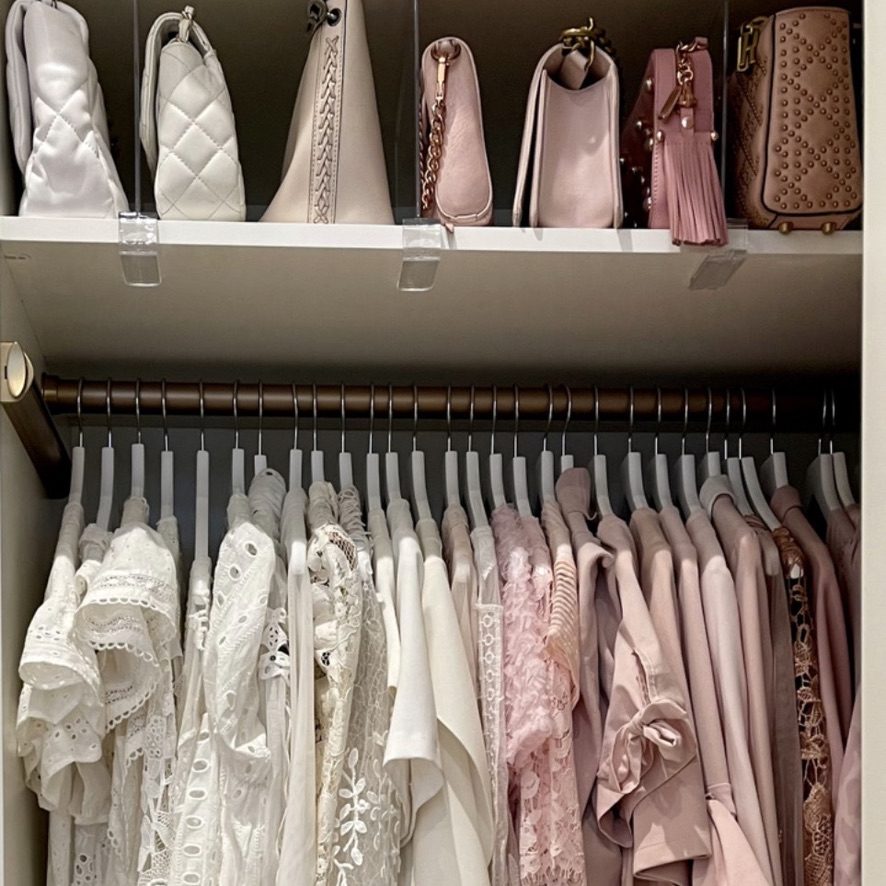
We also like to keep solids together and place prints together at the end of a category. Depending on how much clothing you have and how your closet is laid out, prints can also be mixed in with their coordinating colors. There isn’t a right or wrong answer, so do what makes the closet easiest for you to use.
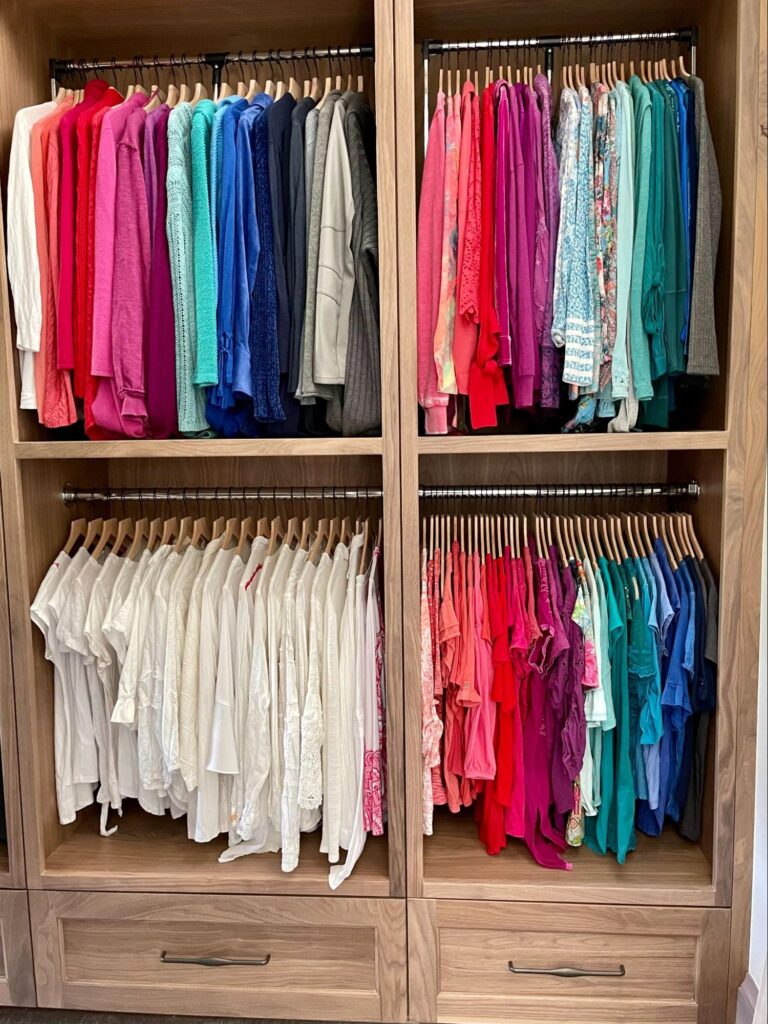
Color-coding is a simple step that makes a surprisingly big difference. It makes clothing easier to find and immediately gives the entire closet a calmer, more intentional look.
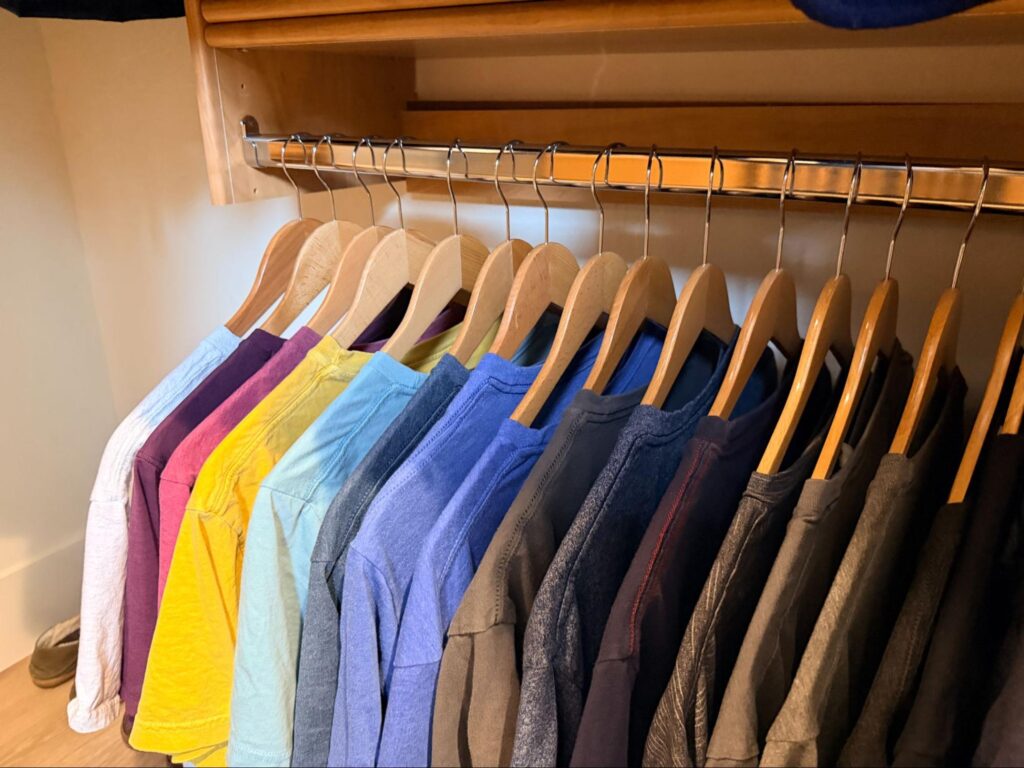
Matching hangers can completely change the appearance of a closet. Choose hangers that work with your clothing, your closet, and your personal style. Slim hangers can save valuable hanging space, while acrylic or wood hangers create a more elevated look.
We like to choose hangers that complement the tone and finishes of the closet, then coordinate baskets and labels with them. A hanger collection that offers slim, suit, pant, and skirt options lets you choose the right hanger for each type of clothing while keeping everything uniform.
You don’t have to buy everything at once. If you’re organizing on a budget, create a plan and gradually purchase the right products rather than buying inexpensive organizers that don’t really work for the space.
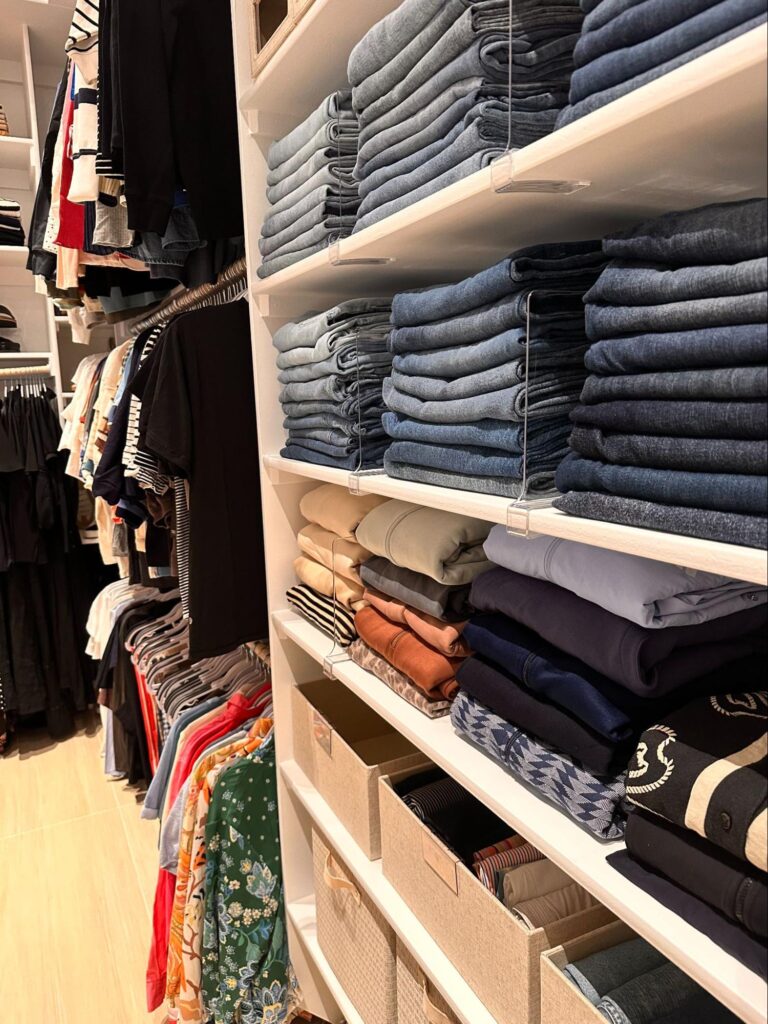
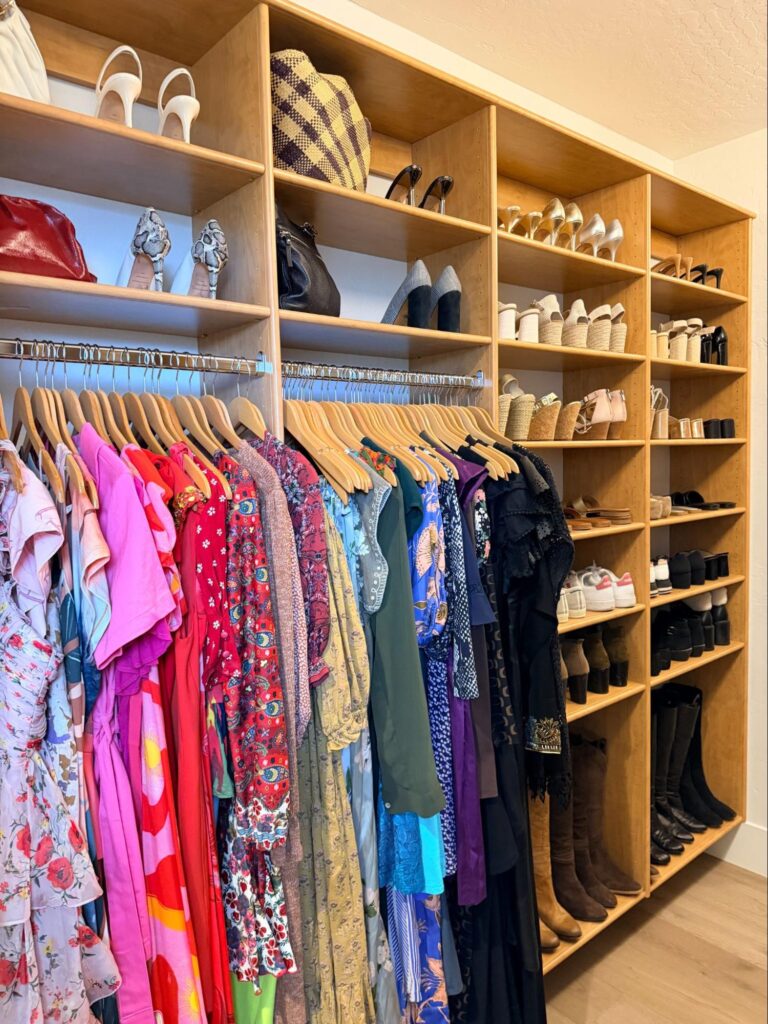
Don’t overlook shelf space. Sweaters, jeans, and pants can be folded neatly on shelves rather than taking up valuable hanging space. Denim holds its shape well and stacks nicely, and folding sweaters keeps them from stretching out on a hanger.
If your closet has tall shelves with a lot of wasted vertical space, adding another shelf can make a huge difference. These walk in closet storage ideas are especially helpful in a small closet, where every inch counts. Shelves are also a great home for shoes, purses, hats, and baskets that hold smaller accessories.
The goal is to use the space you have efficiently without making it feel crowded.
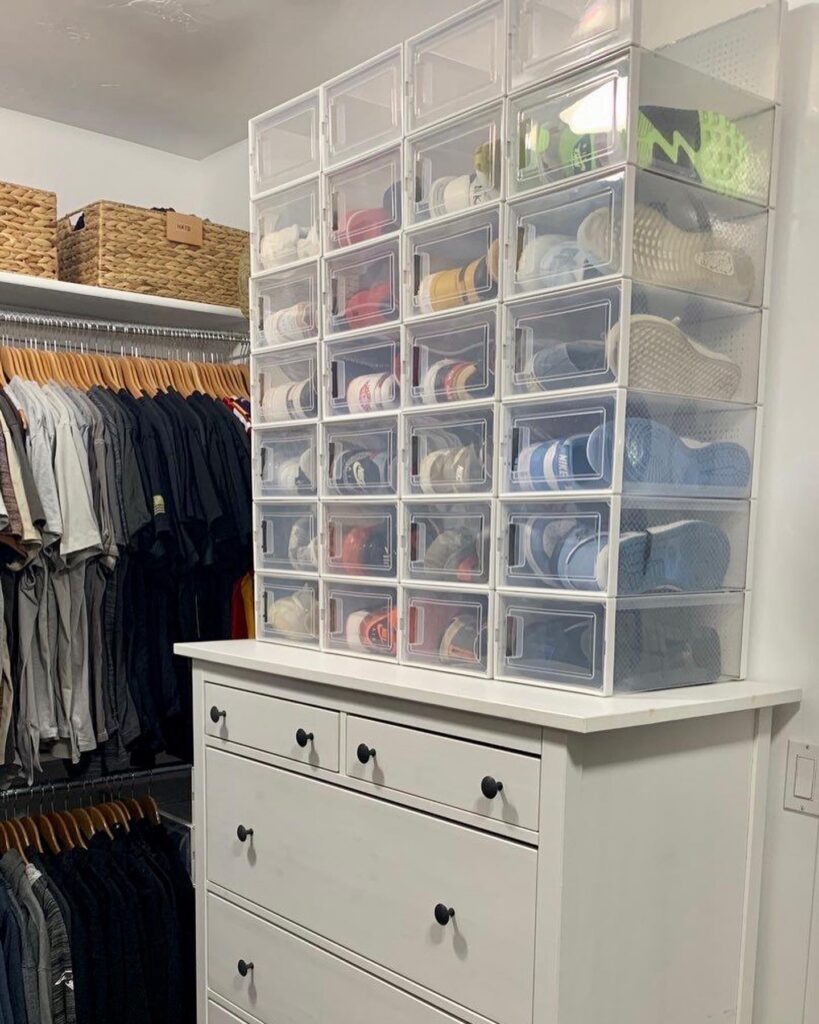
There isn’t one right way to organize accessories. The best solution depends on your closet, how much you own, and the type of storage you have available.
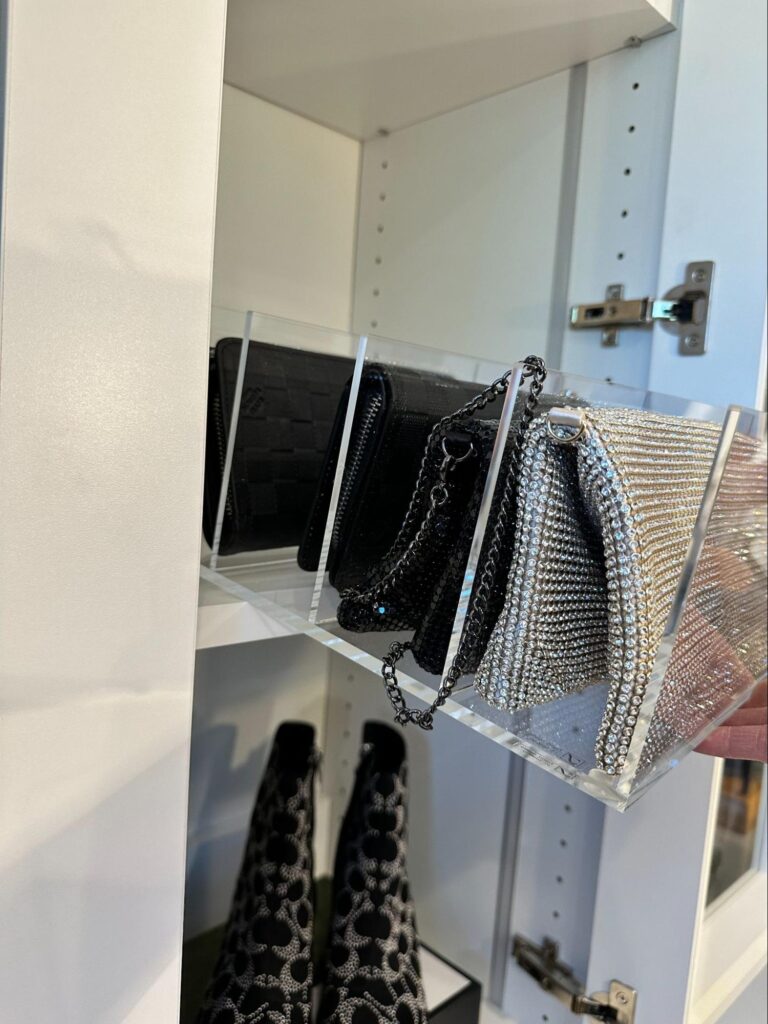
Ties, for example, may work beautifully folded or rolled in a drawer with dividers in one closet. In another, it may make more sense to hang them on a slim tie organizer. The same idea applies to scarves, belts, hats, purses, and jewelry. Purses might be lined up on a shelf or kept upright with acrylic dividers. Scarves could be rolled in a drawer, placed in a divided basket, or hung. Hats might work best on a shelf, in a drawer, or in a basket.
Shoes can go directly on shelves, on shoe racks, or in drop-front shoe boxes. Shoes you wear often should be easy to reach, while those you wear less frequently can usually be stored higher. Don’t force your closet to fit a particular organizing system. Find the system that works best for the space you have.
Here’s a category people often forget: clothes that aren’t quite clean, but aren’t really dirty either. Instead of tossing them over a chair, onto the floor, or back in with your clean clothes, designate a few hooks for items you plan to wear again.
It’s a small system that prevents a lot of everyday closet clutter, and it makes use of open wall space you might otherwise overlook.
One of the biggest mistakes we see is buying organizing products before deciding what actually needs to be organized. Instead, follow this order. Declutter first. Categorize second. Decide where everything will live. Then measure and purchase products.
You might need baskets, shelf dividers, drawer organizers, acrylic dividers, shoe organizers, or additional shelving. The best walk-in closet organizer ideas are the ones chosen after the system is in place, because you’ll know exactly what you need and what size it should be.
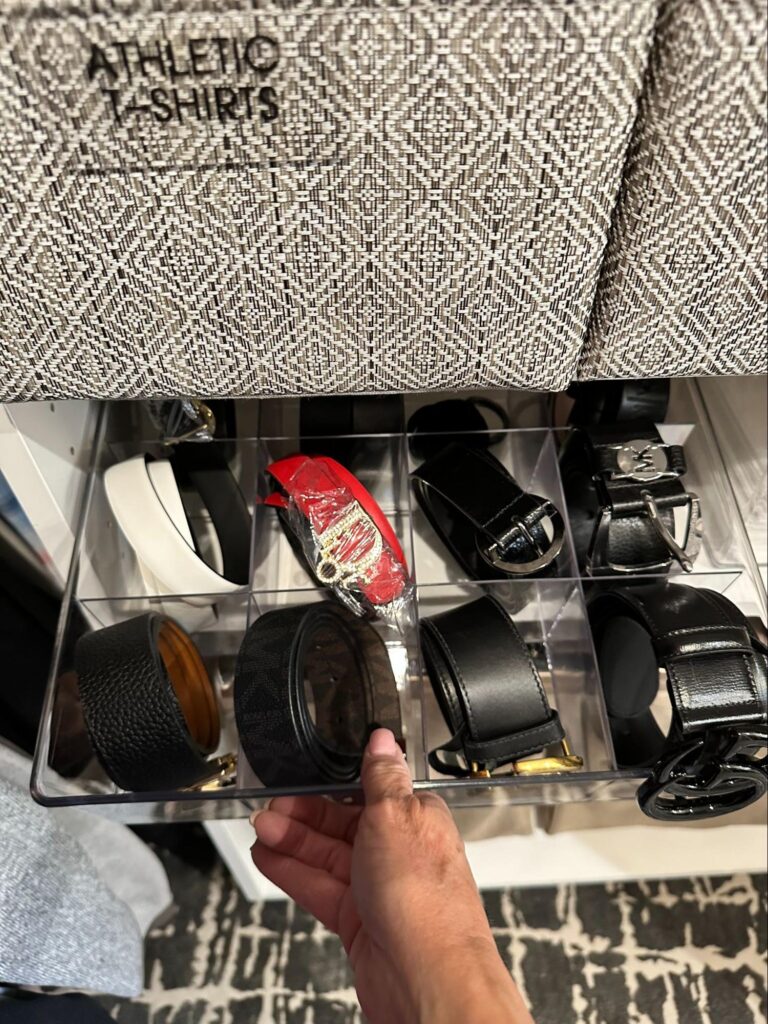
Organizing products should solve a problem, not create another one. If you’re interested in Tracy’s favorite organization products, you can shop them through her Amazon storefront or the Organize Simply LTK shop.
Just because you have space doesn’t mean you need to fill it. Leave some breathing room between hanging clothes. Don’t stack shelves so high that pulling out one sweater knocks over the entire pile. Don’t stuff drawers or baskets until you can’t easily put things back.
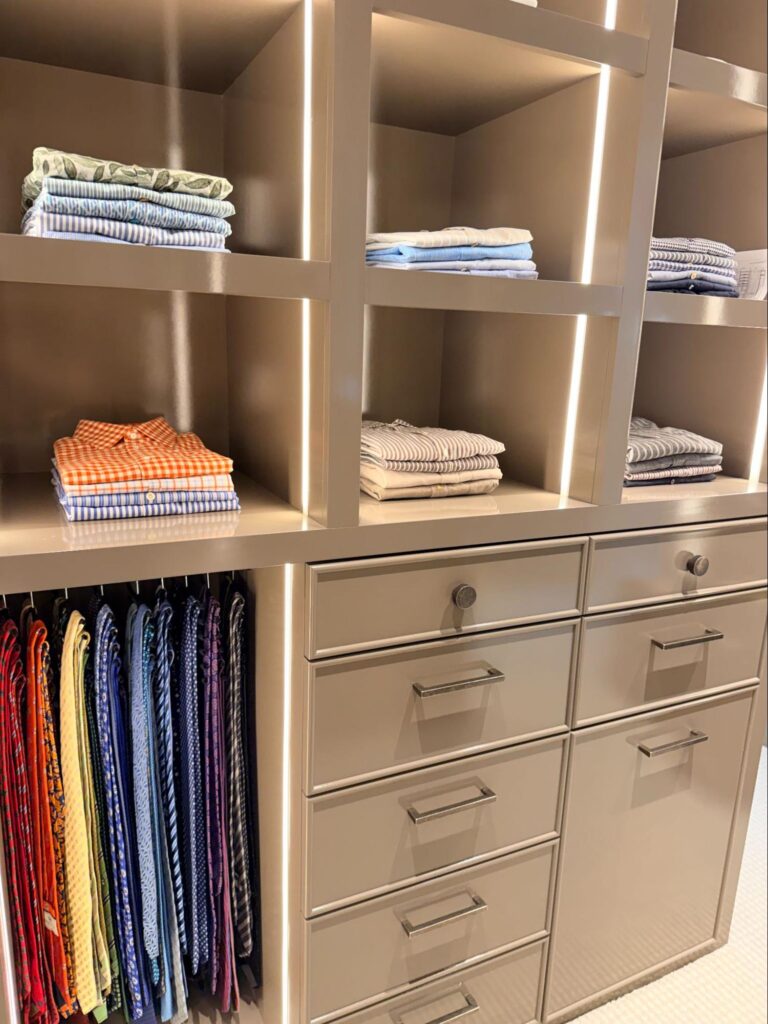
An organized closet should feel calm when you walk into it. And remember: let the space establish the limit. If your designated sweater shelf is full, that’s your signal to edit your sweaters, not to find another place to start storing them. When every category has a defined home and fits comfortably within it, maintaining your closet becomes much easier.
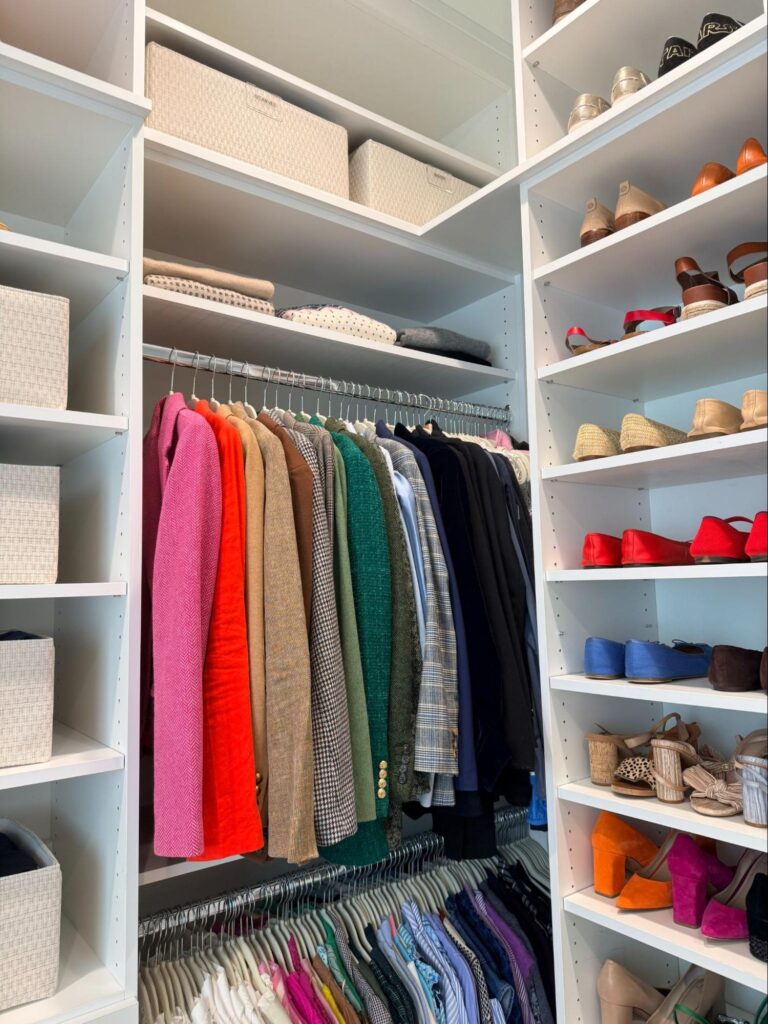
A beautiful closet is nice to look at, but if the system is difficult to maintain, it isn’t really organized. At Organize Simply, our goal is always to create spaces that are beautiful, functional, and maintainable.
Edit what you own. Group like items together. Give every category a home. Let the available space determine how much you keep. Color-code your clothing, and choose organizing products based on your specific space.
You don’t need the biggest closet or the most organizing products. You need the right amount of stuff for the space you have and a designated home for everything you keep. That’s what makes an organized closet work.
If you’re looking for help organizing your closet into a space you love, we’d love to help! Reach out to Organize Simply, and we’ll help you create your dream closet.