Let’s be honest: the basement is where good intentions go to hide. It starts with one box of “I’ll deal with this later,” and a few years on you’ve got a wall of mystery bins, a broken treadmill, and a path just wide enough to reach the water heater. The good news is that a […]
Let’s be honest: the basement is where good intentions go to hide. It starts with one box of “I’ll deal with this later,” and a few years on you’ve got a wall of mystery bins, a broken treadmill, and a path just wide enough to reach the water heater.
The good news is that a basement can be one of the most useful spaces in your home once it’s organized. These basement organization ideas will help you turn that catch-all into a clean, functional space, whether you have a sprawling lower level or a small corner under the stairs. At Organize Simply, we love a good before-and-after, and basements give the best ones.
Before you buy a single bin, take a look at the environment you’re working with. Ask yourself whether the space is climate-controlled or prone to humidity and temperature swings, and whether it has a history of moisture, flooding, or musty odors. The answer shapes every storage choice you make.
A finished, dry basement can be treated like any other room in your home. An unfinished one is different: because it sits partly underground, moisture levels can run high and lead to mold, so anything that can warp or mildew is at risk. That means cardboard boxes, photos, and important papers should not live down there unless they’re protected.
If you notice dampness, tackle it early. Find where the water is coming from and address it at the source, and consider a dehumidifier. One storage pro calls it often the single highest-leverage purchase for basement storage, since it prevents so much damage.
I know, I know. Nobody gets excited about this step. But organizing clutter just gives you neatly arranged clutter, and basements collect a lot of it
Start by pulling everything out and grouping like items together. Put holiday decor with holiday decor, tools with tools, sports gear with sports gear, etc. When you can see all the items within each category together, it’s much easier to understand what you actually have. You can then make more intentional decisions about what deserves space in your basement.
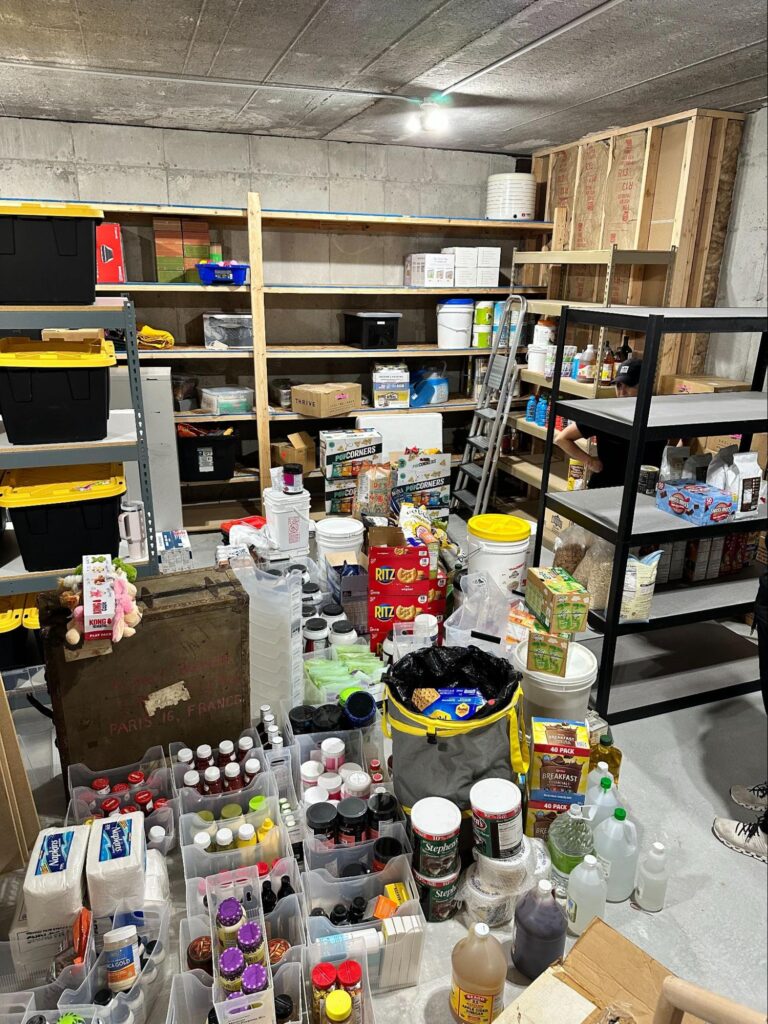
Next, work through each category and decide what you still use and genuinely want. Move anything you’re ready to part with into donate piles. This is where those “just in case” items become easier to spot. Do you really need three sets of extension cords? Is that exercise equipment worth the space it’s taking up? When duplicates and unused items are grouped together, letting go tends to get much simpler.
Categories are the foundation of every good system, and the same approach works in the kitchen. If you want to see it in action, our pantry organization ideas use the same sort-and-group logic.
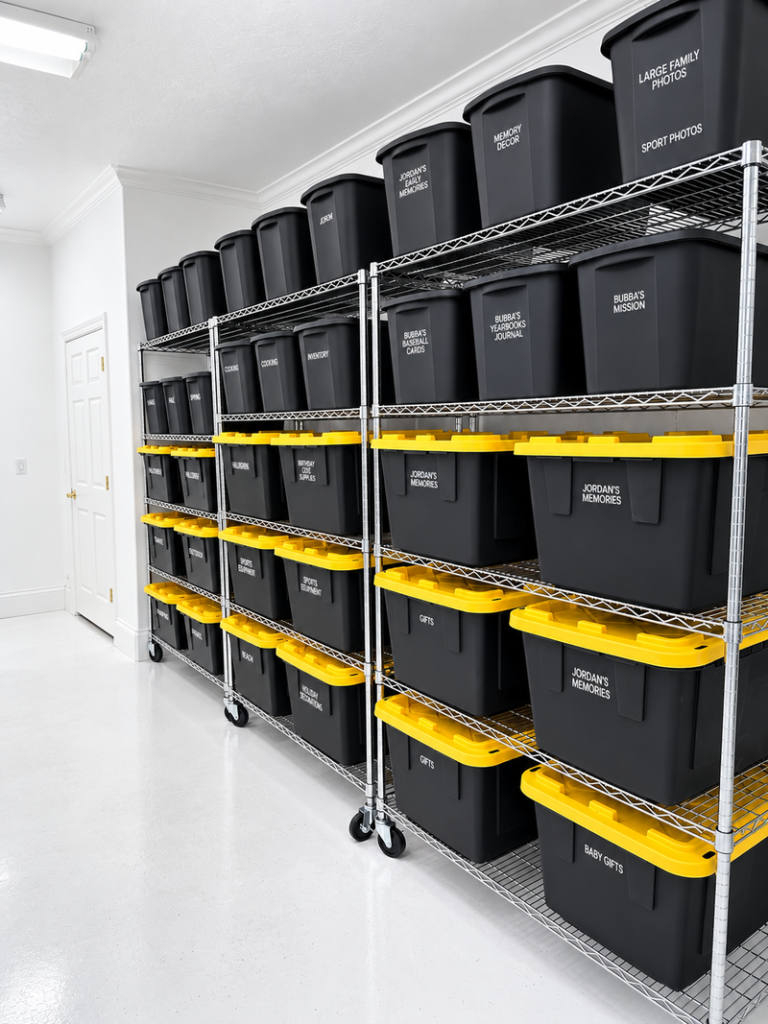
If you only follow one piece of advice in this post, make it this one. The underlying rule of all basement organization ideas is to keep things off the floor to protect against water damage.
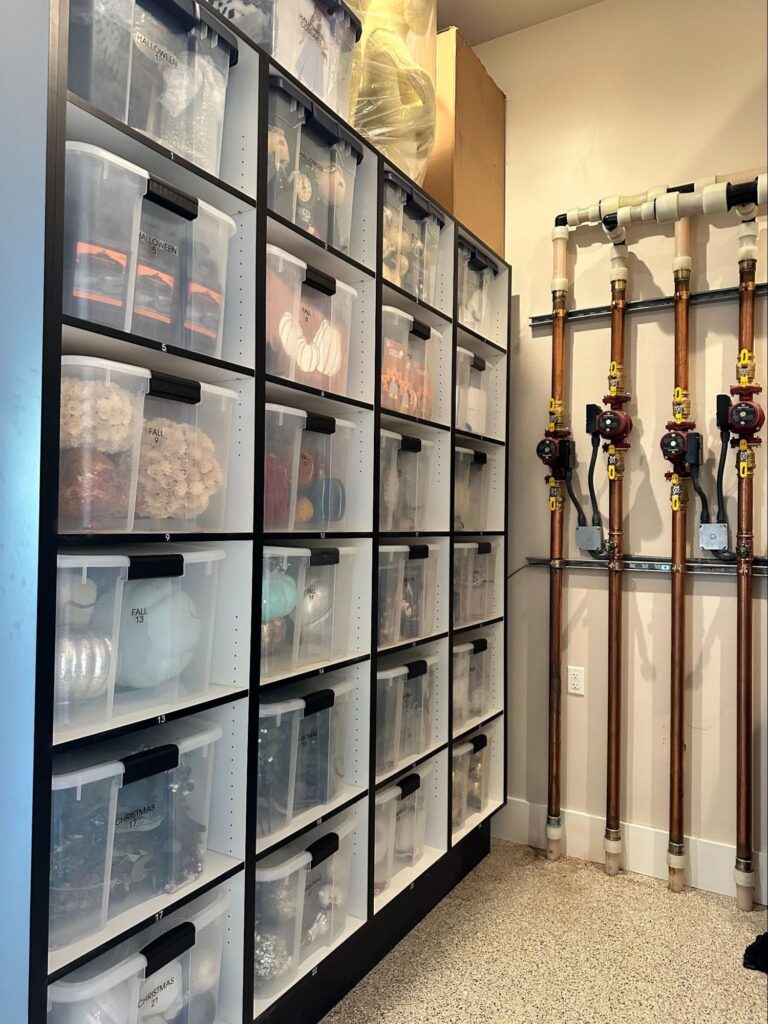
Even if your basement has never flooded, a leaky pipe or a heavy storm can change that fast. Shelving is your best defense, and it also frees up a surprising amount of floor space. If you have any history of water, one expert suggests going to twelve inches minimum on anything you’d be sad to lose. For everyday storage, a few inches of clearance is a good starting point.
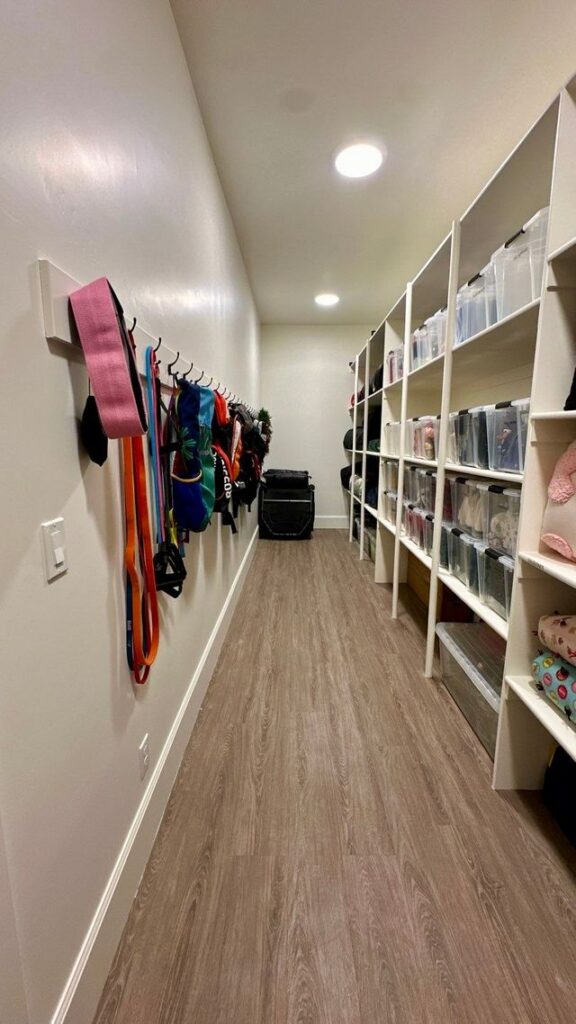
Good basement shelving ideas come down to sturdy, moisture-friendly, and easy to reach. A few options to consider:
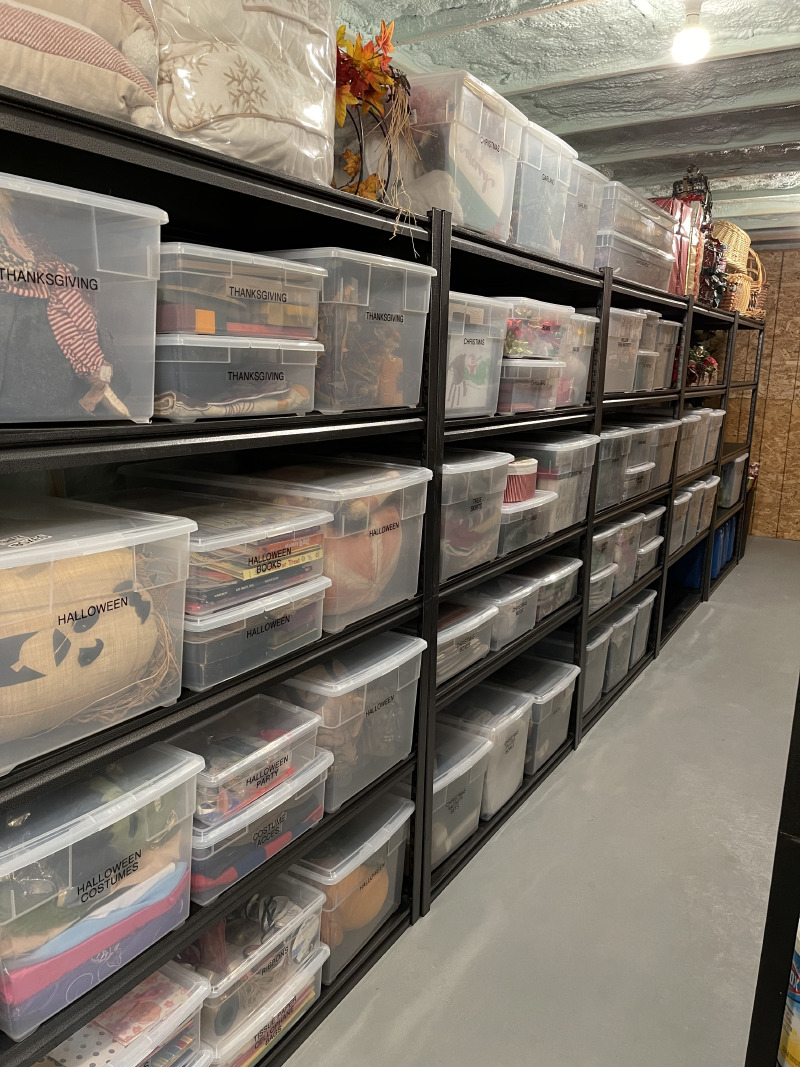
For many organizing projects, we recommend simple freestanding shelving, such as the kind you can find at Costco. Their black Gorilla shelving is a favorite for garages and storage rooms because the deeper, wider shelves can accommodate large totes and bins. In tighter spaces, we often use the narrower chrome Trinity shelving instead. Think about placement, too. Put heavier items on the bottom shelves and lighter ones above, and store irreplaceable things on the highest shelf in case water ever gets in.
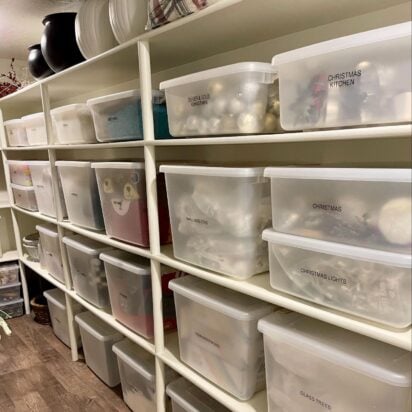
Cardboard boxes are the classic basement mistake. They soak up moisture, attract pests, and collapse under weight. Plastic containers keep your belongings safe from dust, pests, and dampness, and they stack neatly too.
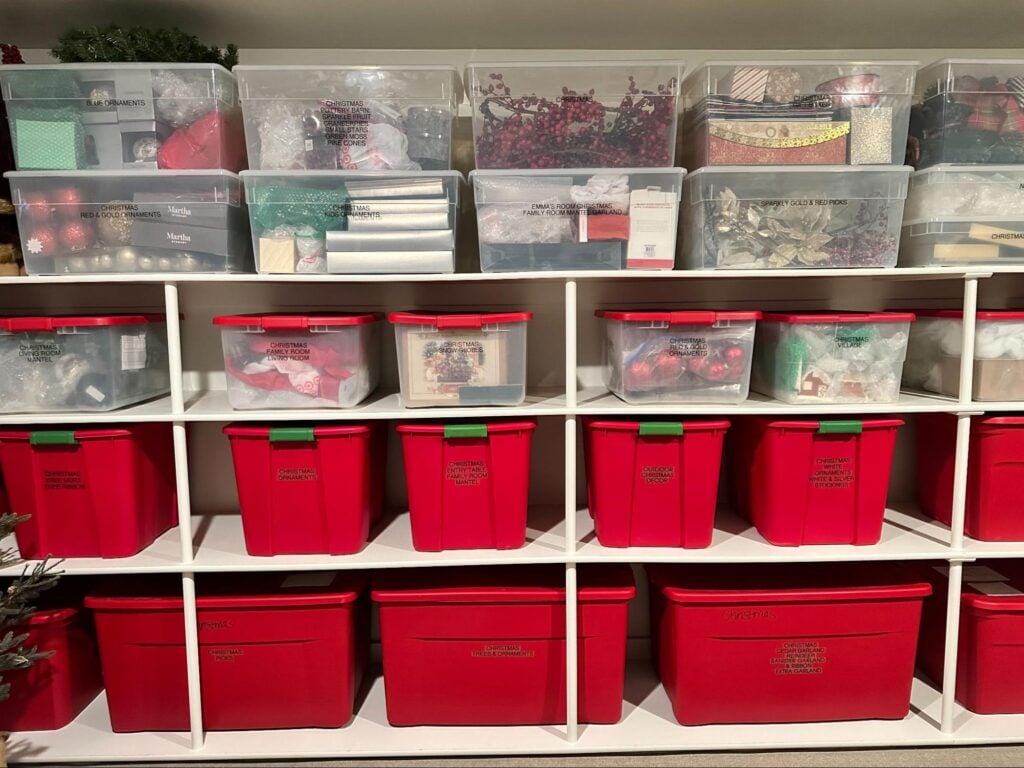
A few tips for choosing bins:
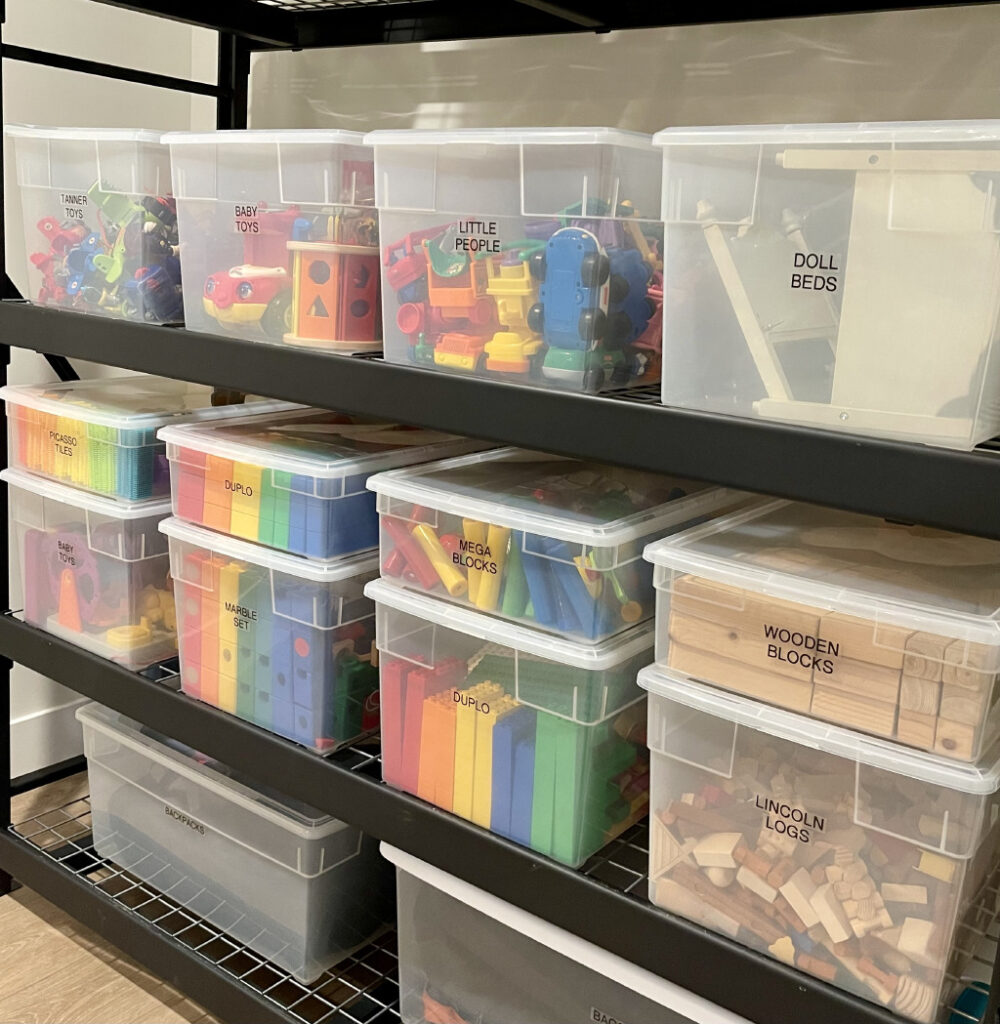
A good label should make it easy to find what you need without pulling bins off the shelf and opening them. For basement storage, we like large, bold labels that you can easily read from a distance. This is particularly important for opaque bins, where the label is your quickest way to identify what’s inside.
Be specific, but not too specific. When you try to list everything that is inside a bin, the label becomes long, cluttered, and harder to read. Think in categories instead. For example, if a bin holds the decorations you use on your mantel, simply label it “Mantel Decor” rather than listing every item inside.
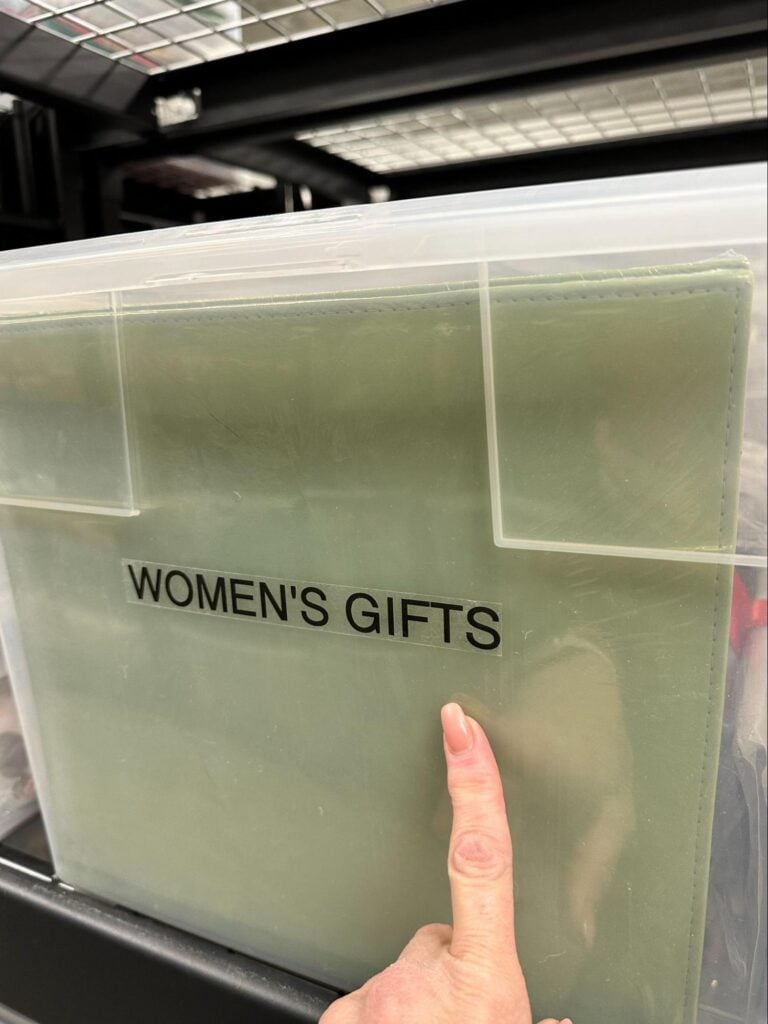
For all of our organizing projects, we use a label maker that prints 3/4-inch labels. It allows us to create the large, bold labels we love for storage bins, but it can also make much smaller labels when needed.
We’ve rounded up our favorite storage bins, shelving solutions, labels, and other organizing essentials to help you get started. Check out our curated collections on LTK and our Amazon Storefront to shop the products we love and recommend.
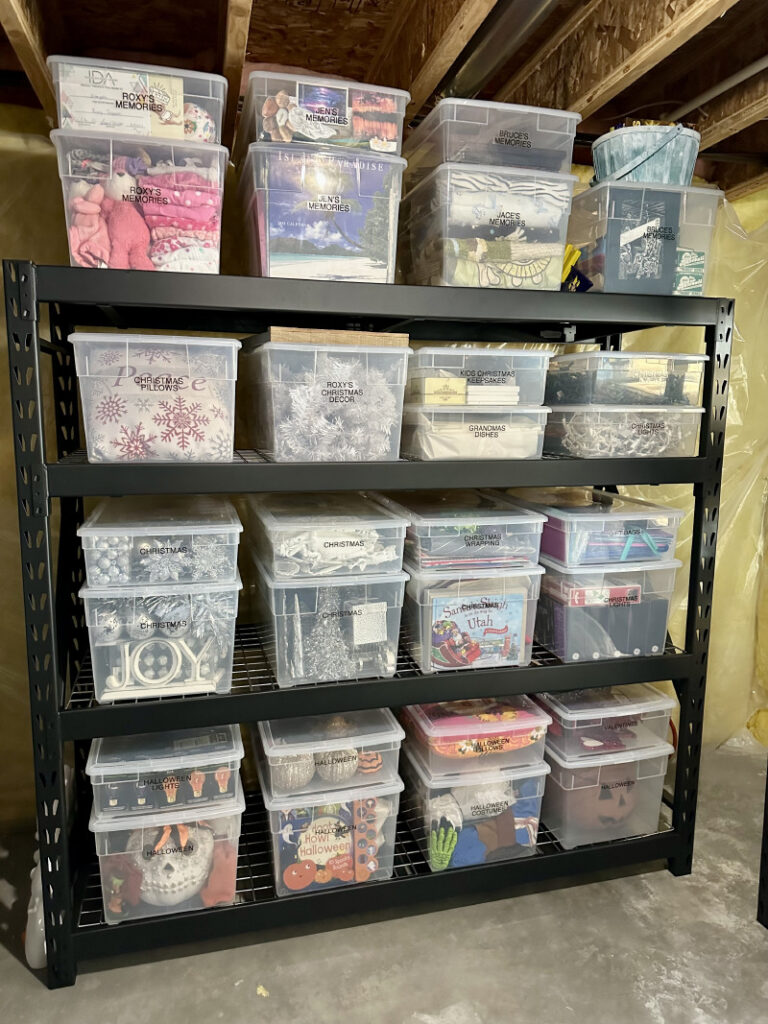
A basement often has to do a lot of jobs at once. Maybe it’s part workshop, part laundry room, part playroom, and part holiday closet. Zones keep those jobs from bleeding together.
Set up separate areas for things like tools, play, and laundry, and keep items you use together close to each other. Define each area with shelving placement, a moisture-resistant rug, or even a simple piece of floor tape. When every category has a home, putting things away becomes automatic.
A few zone ideas to try:
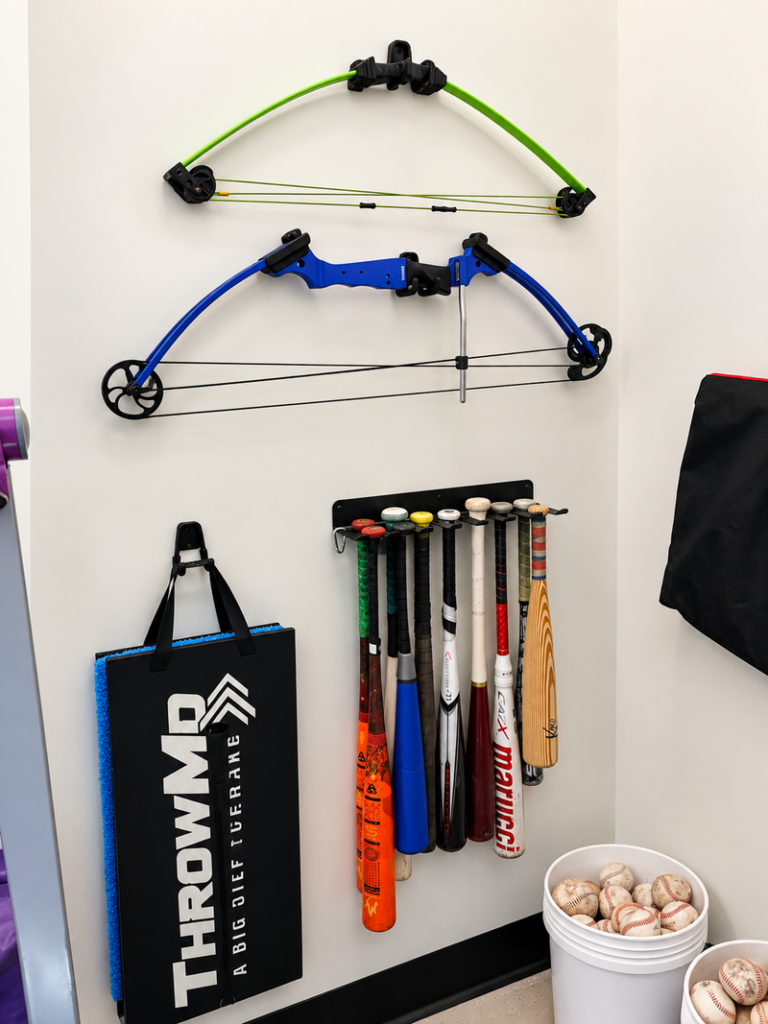
Small basement storage ideas nearly always involve going vertical. Pegboards are a favorite because they get things off the floor and within easy reach. Heavy-duty hooks work well for bikes, folding chairs, and seasonal items. Wire racks and hooks are also handy for hanging tools, sewing supplies, or craft accessories.
Don’t overlook the overhead space. Ceiling-mounted racks are great for lightweight, rarely used items like luggage or holiday decorations, as long as you install them securely into joists.
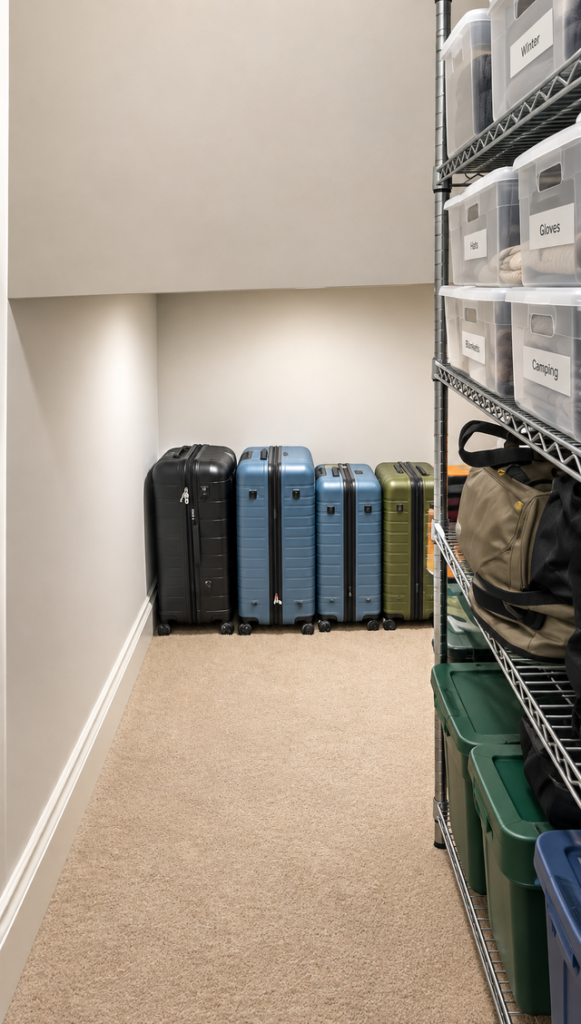
The area under the stairs is prime real estate, too. Just consider headroom and make sure any system you install doesn’t interfere with the structural integrity of the stairs. Rolling bins or shallow cabinets often fit nicely in this space. Wire racks (such as the Costco Trinity shelves we mentioned earlier) are another effective option, just trim the poles using a tube cutter so they fit the slope under the stairs. .
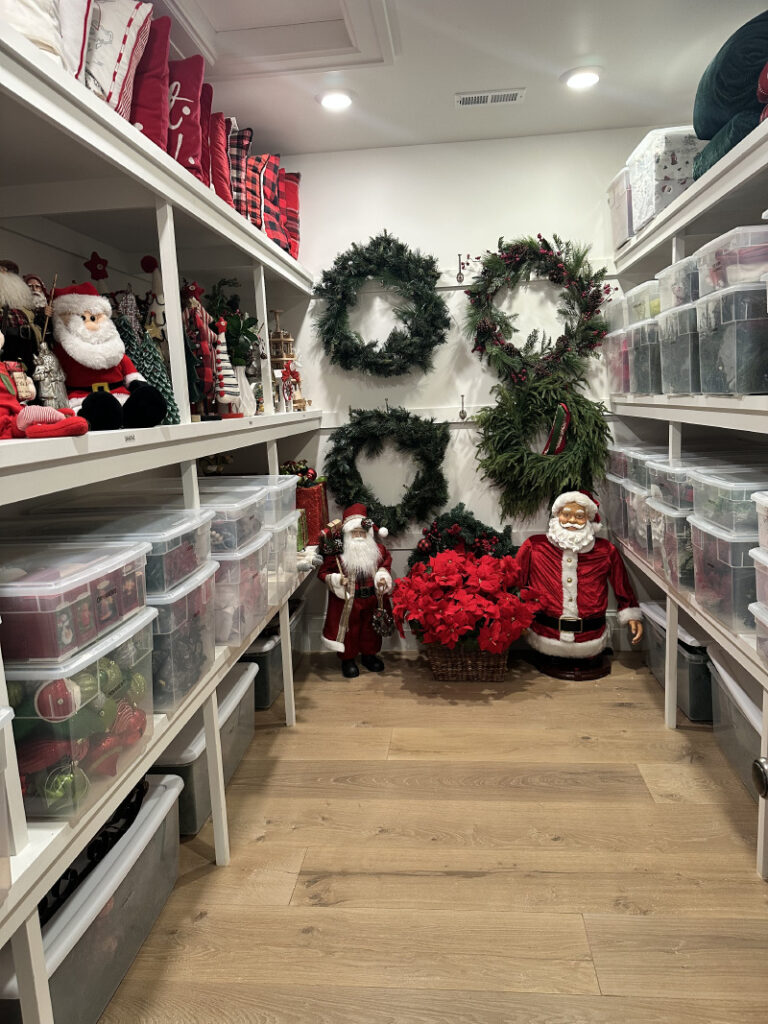
Dark corners make basements feel messy, and they make it hard to find things. Better lighting is one of the easiest upgrades you can make. Add overhead fixtures, task lighting over workbenches and laundry areas, and motion-activated strips on shelves, in dark corners, and along the stairs. Bright, cheerful light makes you more likely to keep the space tidy, and it’s much safer to walk around in.
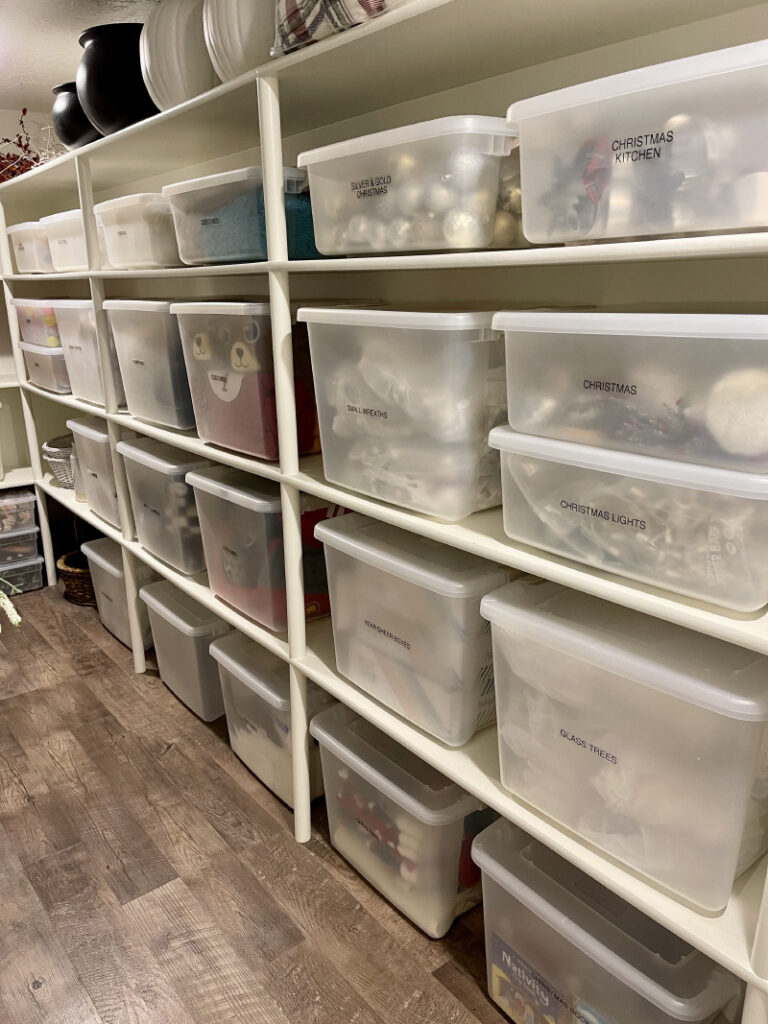
An organized basement isn’t a one-and-done project. Twice a year, maybe when the clocks change, take 30 minutes to do a quick reset:
That small habit keeps a big cleanout from ever becoming necessary again. Need a similar plan for another area? Our storage room organization guide walks you through it step by step.
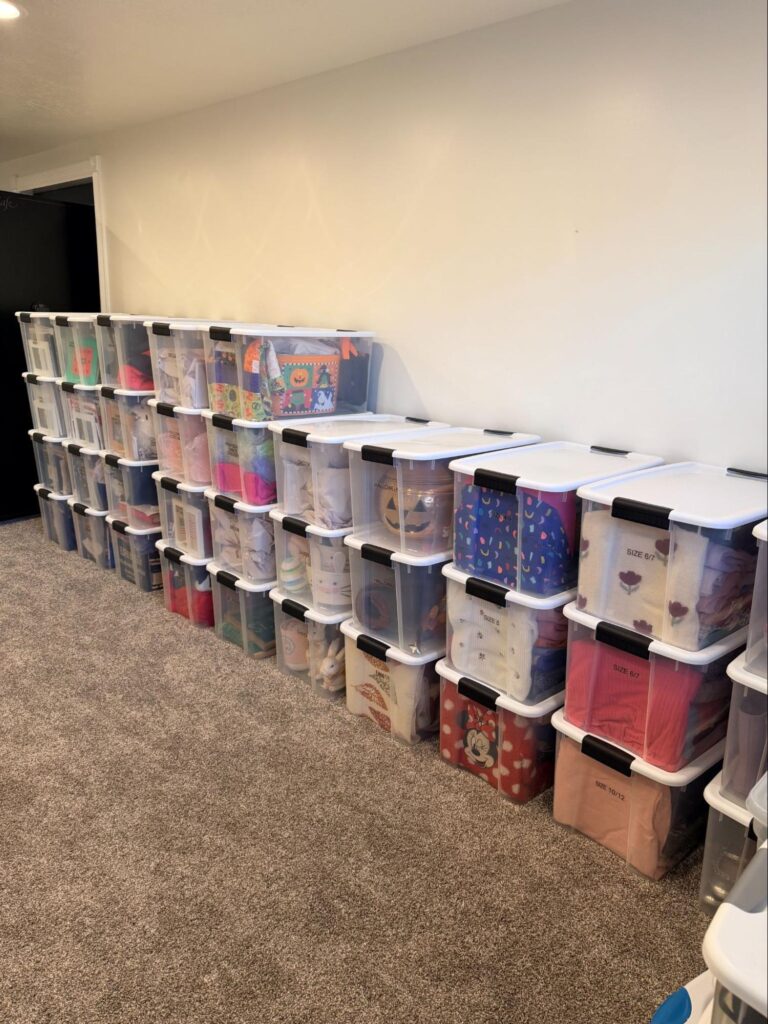
Sometimes a basement is simply too big, too full, or too overwhelming to tackle alone, and that’s completely okay. If you’d like a partner to help you sort, plan, and set everything up, our professional organizing services are here to help. We’ll work with your space, your stuff, and your schedule.
With a little planning, that dark, cluttered basement can become a place where everything has a spot and you can find it in seconds. Start with the environment, declutter honestly, get everything off the floor, and build zones that make sense for your family. Small steps add up quickly, and the payoff is a home that feels lighter from top to bottom.
Assess the space before you buy anything. Check for moisture, leaks, or musty smells, since those determine what’s safe to store and what type of shelving and bins you need. Then declutter and sort everything by category. Once you know what you’re keeping, planning your storage is much easier.
Go vertical. Tall shelving, pegboards, wall hooks, and ceiling racks all use space you aren’t using anyway. The area under the stairs is another good spot for shallow cabinets or rolling bins. Stick to one or two bin sizes so everything stacks neatly and nothing sprawls.
Be careful with anything that can warp, mold, or fade, especially in an unfinished or damp basement. Cardboard boxes, photos, and important documents are the usual examples. Fabrics and keepsakes also need airtight bins, and important papers are better kept in a drier part of the house.
Start with moisture control. Run a dehumidifier, keep air moving, and fix any leaks at the source. Skipping cardboard for gasketed plastic bins also helps a lot, since cardboard holds moisture and invites mold and pests. Most experts suggest aiming for a humidity level between 30 and 50 percent.
Both can work well. Metal shelving is sturdy and handles heavy loads, while plastic resists rust and dampness. Steel shelves that adjust in height are a good pick for low ceilings and hold up well to basement moisture. Whichever you choose, make sure the shelves are rated for the weight you plan to put on them.
A quick reset twice a year is plenty for most homes. Check for moisture, return stray items to their zones, and donate anything you no longer need. Tackling it in small, regular check-ins keeps the space from ever getting out of hand again.